Mary Berry Lancashire Hotpot Recipe (Rich Lamb & Crispy Potatoes)
I found the idea for this Mary Berry Lancashire Hotpot Recipe while flipping through one of Mary Berry’s older cookbooks on a quiet evening at home.
The photo looked so warm and comforting that I ended up making it the very next day, and honestly, the smell coming from the oven alone made it worth it.
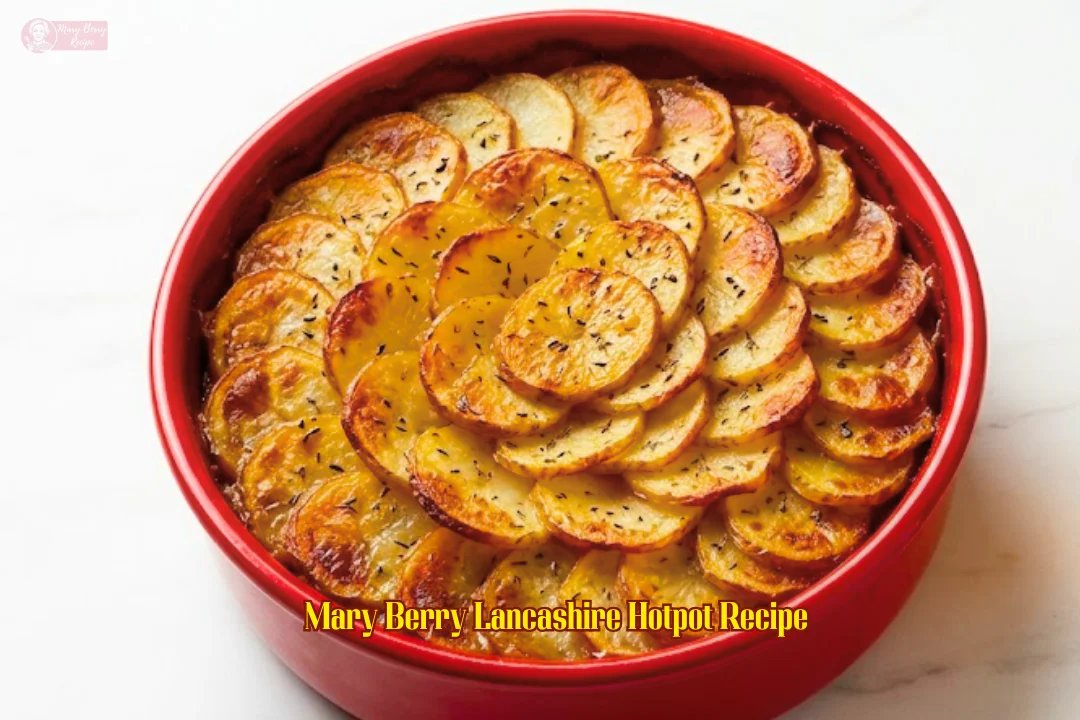
This classic Lancashire hotpot recipe is built on simple things done properly. Tender lamb cooks slowly in a rich onion gravy, then everything gets tucked under thin slices of potato that turn golden and crisp round the edges.
It feels like the sort of meal made for cold evenings, thick socks, and a proper sit-down dinner after a busy day.
What pulled me into this lamb hotpot wasn’t fancy ingredients or difficult cooking steps. It was the idea of making something hearty and old-fashioned that still tastes brilliant now.
After the first bite, I knew this homemade Lancashire hotpot would stay in my kitchen for a long time. So, Today I decided to share the Mary Berry Lancashire Hotpot Recipe so that you can make it at home like me.

Reasons to Fall in Love with This Lancashire Hotpot
- Big comfort in one dish: I love how everything cooks together in one pot and turns into a warm, filling meal.
- Rich lamb flavour: The browned lamb and gravy make every spoonful taste deep and savoury.
- Golden potato topping: The crisp potatoes on top add the best texture after the slow cooking.
- Easy ingredients: You only need basic shop cupboard bits and fresh vegetables from any supermarket.
- Perfect for cold evenings: This hotpot feels extra cosy during rainy nights or chilly weekends.
- Great for leftovers: I think it tastes even nicer the next day once the flavours settle together.
- Simple cooking method: You don’t need tricky skills to make this dish turn out well.
Cut of Lambs & Potatoes That are Best for This Lancashire Hotpot
Lamb shoulder or lamb leg work best for this hotpot, and I always use floury potatoes for the topping.
After trying both cuts a few times, I found lamb shoulder gives a richer flavour because it has a bit more fat and becomes very tender after baking.
For potatoes, I like Maris Piper or King Edward. They soften nicely inside while still turning crisp on top.
Waxy potatoes never gave me the same golden finish, so I stopped using them for this dish.
Perfect For
This hotpot fits into so many normal days at home. I make it when I want something filling without standing in the kitchen all evening.
- A quiet Sunday dinner with the telly on in the background
- Rainy evenings when you want warm comfort food
- Cooking ahead for busy weekdays
- Sharing with grandparents or older relatives who enjoy classic meals
- Cosy autumn suppers after work
- Taking round to a mate who needs a homemade dinner
- Stretching one meal across two days without losing flavour
Mary Berry Lancashire Hotpot Ingredients
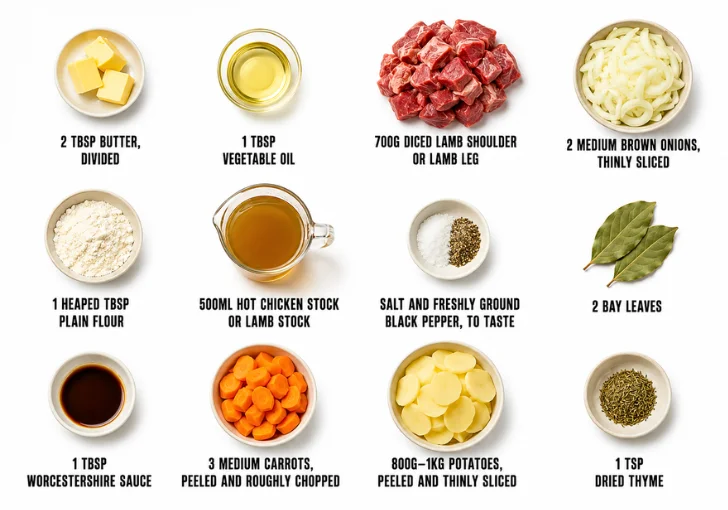
2 tbsp butter, divided – I use proper salted butter here, usually Lurpak or Yorkshire butter if I have it in the fridge. Part of it helps brown the lamb at the start, then the rest gets brushed over the potatoes so they bake up golden and crisp.
1 tbsp vegetable oil – A little oil stops the butter catching too quickly in the pan while the lamb browns. Any basic vegetable oil works fine here, and it helps give the meat a nice deep colour without burning the butter.
700g diced lamb shoulder or lamb leg – Lamb shoulder gives a richer and softer finish because of the extra fat, though lamb leg works nicely too. I usually buy whatever looks freshest at Tesco or Aldi, then trim off any really large fatty bits before cooking.
2 medium brown onions, thinly sliced – Brown onions slowly soften into the gravy and give the hotpot its lovely deep flavour. They almost melt down while baking, which makes the sauce taste richer without adding anything fancy or complicated.
1 heaped tbsp plain flour – The flour thickens the gravy and helps it cling properly to the lamb and vegetables. I just use standard plain flour from the cupboard, nothing special, and stir it through well before adding the stock.
500ml hot chicken stock or lamb stock – Hot stock builds the savoury gravy and keeps everything rich while baking. Lamb stock gives the strongest flavour, but chicken stock works perfectly too and is usually what I already have sitting in the kitchen cupboard.
Salt and freshly ground black pepper, to taste – Good seasoning matters in a slow-cooked dish like this because it lifts the flavour of the lamb and gravy. Freshly cracked black pepper gives a better taste than pre-ground pepper, especially once everything cooks together in the oven.
2 bay leaves – Bay leaves quietly add warmth and depth while the hotpot slowly bubbles away. You don’t strongly taste them at the end, but the gravy feels flatter without them, so I always keep a small jar in the cupboard.
1 tbsp Worcestershire sauce – This gives the gravy a deeper savoury flavour with a tiny bit of sharpness in the background. Lea & Perrins is the one I normally use because it blends into the sauce really well without overpowering the lamb.
3 medium carrots, peeled and roughly chopped – Carrots add a little sweetness and make the filling feel heartier. I chop them into chunky pieces so they stay soft but still hold their shape after the long baking time.
800g–1kg potatoes, peeled and thinly sliced – Maris Piper or King Edward potatoes work best for that classic Lancashire hotpot topping. They soften underneath while the edges turn crisp and golden, which is honestly one of the best parts of the whole dish.
1 tsp dried thyme – Dried thyme gives the hotpot a warm earthy flavour that works beautifully with lamb. I sprinkle it over the potatoes before baking so the smell comes through nicely once the top starts turning golden in the oven.
Ingredient Swaps and Twists
- Use beef instead of lamb: Beef chuck works nicely if you prefer a milder flavour.
- Swap the carrots: Parsnips or swede also taste lovely in the gravy.
- Add pearl barley: A small handful makes the hotpot thicker and more filling.
- Use red onions: They bring a slightly sweeter taste than brown onions.
- Try rosemary instead of thyme: Rosemary gives a stronger earthy flavour.
- Add a splash of ale: A little dark ale mixed into the stock gives extra richness.
- Use sweet potatoes on top: The topping turns softer and slightly sweet.
How To Make Mary Berry Lancashire Hotpot
Step 01 – Prepare the Oven and Brown the Lamb
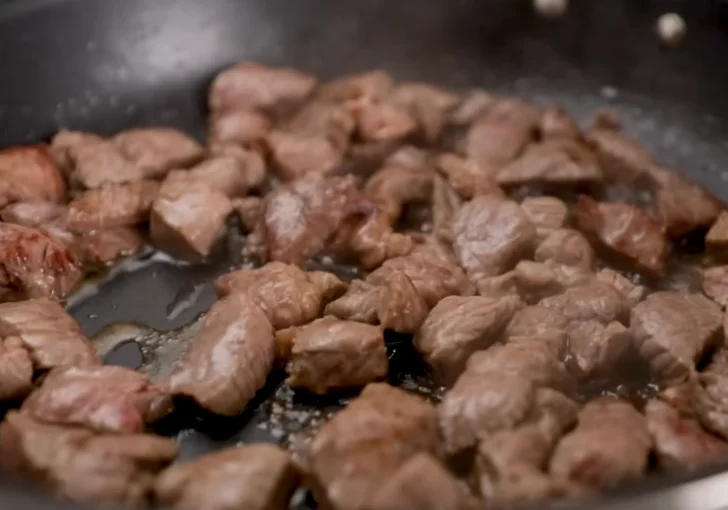
Preheat the oven to 180°C fan / 200°C conventional. Heat 1 tbsp butter together with the vegetable oil in a large frying pan over a high heat. Add the diced lamb and fry for 3–4 minutes, stirring occasionally, until browned all over. Proper browning adds depth and richness to the finished hotpot. Remove the lamb from the pan and set aside.
Step 02 – Cook the Onions
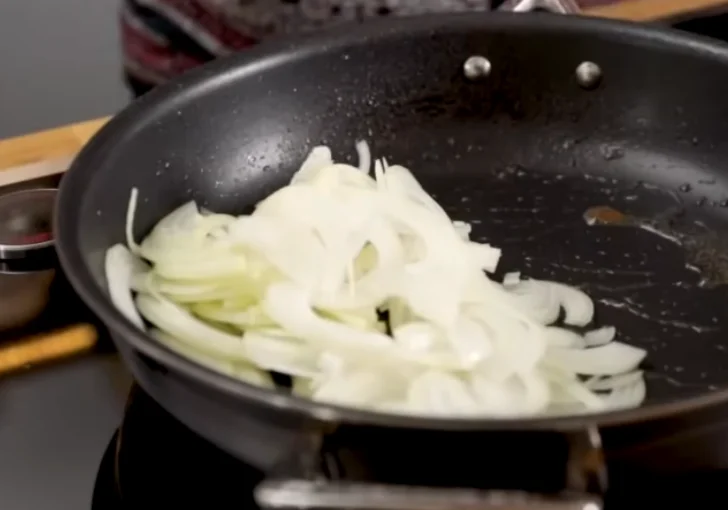
Add the sliced onions to the same pan and cook for 3–4 minutes until softened and lightly golden. Stir regularly so the onions cook evenly and pick up the flavour left in the pan from the lamb.
Step 03 – Build the Gravy
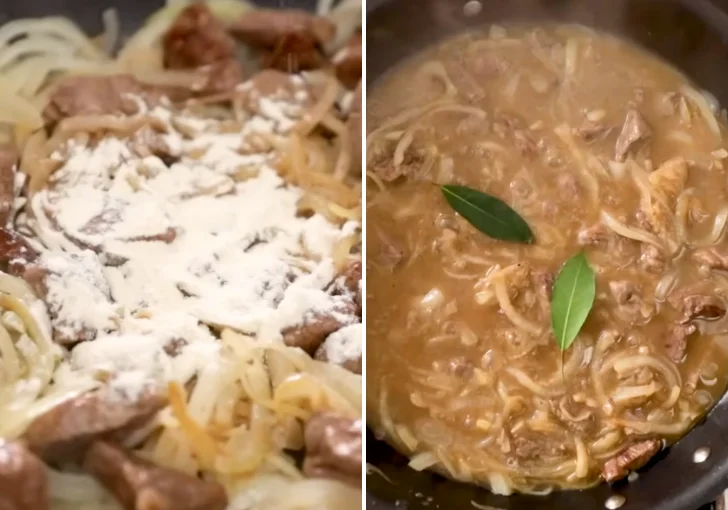
Return the browned lamb to the pan with the onions. Sprinkle over the plain flour and stir well so the flour coats the meat evenly. Slowly pour in the hot stock while stirring continuously to create a smooth gravy. Season generously with salt and black pepper, then add the bay leaves and Worcestershire sauce. Bring everything to a gentle boil.
Step 04 – Start the Initial Oven Cooking
Cover the pan with a lid or tightly with foil and place in the oven for 30 minutes. This allows the lamb to begin tenderising and the flavours to develop before assembling the final hotpot.
Step 05 – Prepare the Carrots and Assemble the Dish
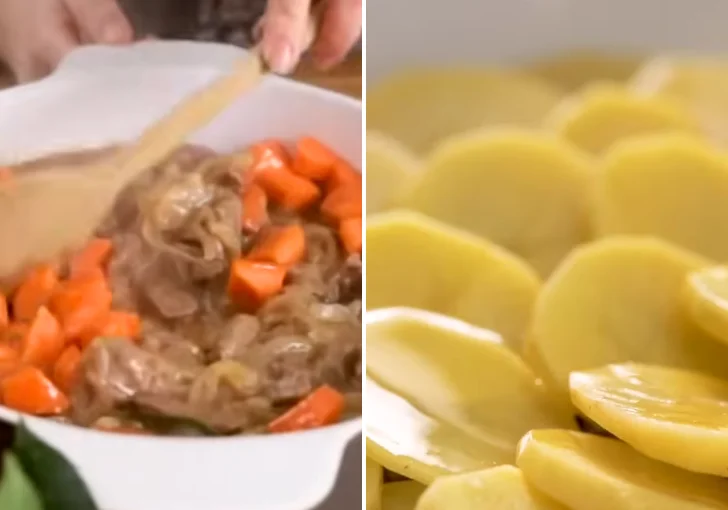
While the lamb cooks, peel and roughly chop the carrots. Remove the lamb mixture from the oven and pour it into a large casserole dish. Stir in the chopped carrots evenly throughout the stew.
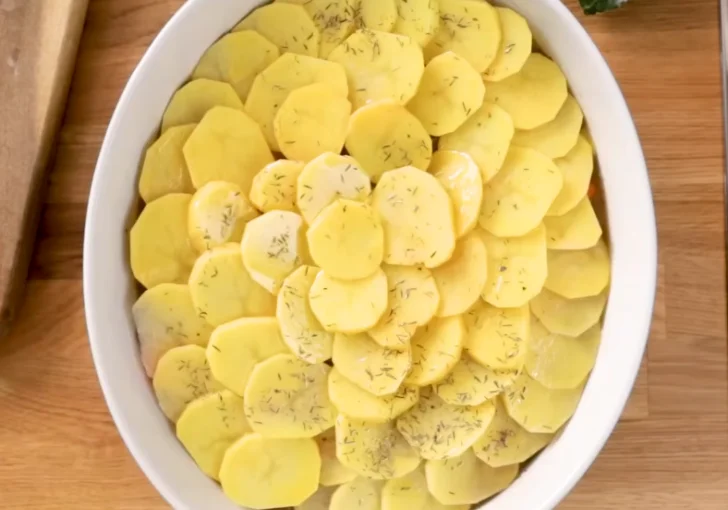
Arrange the sliced potatoes over the top, starting from the outside edge of the dish and overlapping the slices as you work towards the centre. Creating neat overlapping layers helps the potatoes cook evenly and form the classic hotpot topping.
Step 06 – Add Butter and Thyme
Melt the remaining butter and brush it over the potato slices to help them become crisp and golden during baking. Sprinkle the dried thyme evenly over the top for added flavour and aroma.
Step 07 – Bake the Hotpot
Cover the casserole dish tightly with foil and bake for 1 hour. This allows the potatoes to soften while the lamb continues to become tender underneath.
Step 08 – Crisp the Potato Topping
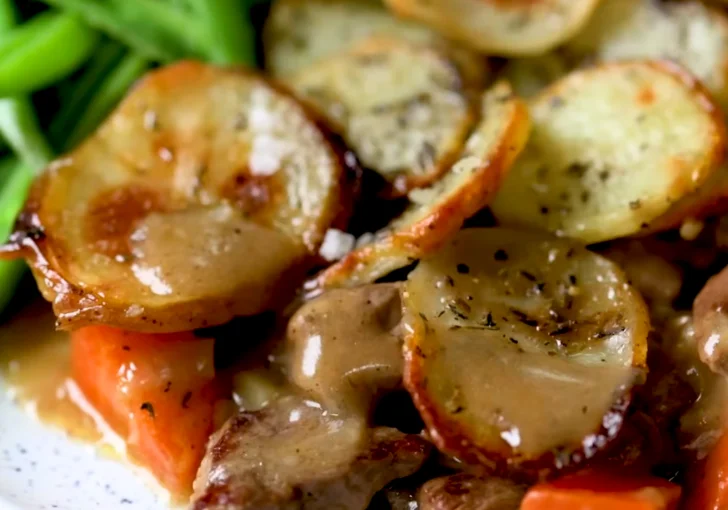
After 1 hour, remove the foil and increase the oven temperature to high, around 220°C conventional. Return the dish to the oven and cook for a further 30 minutes until the potatoes are golden brown and crisp around the edges.
Step 09 – Serve
Remove the hotpot from the oven and allow it to rest for a few minutes before serving. The lamb should be tender, the gravy rich and savoury, and the potato topping crisp and deeply golden. Serve hot on its own or with buttered seasonal vegetables.
Key Notes & Tips for Mary Berry’s Hotpot
Take your time browning the lamb – I used to rush this part, and the gravy always tasted a bit dull. Let the lamb catch proper colour in the pan because those browned bits give the hotpot its deep rich flavour.
Slice the potatoes nice and thin – Thick potato slices stay firm in the middle and never quite soften properly. Thin slices cook evenly and give that lovely crisp top with soft layers underneath.
Use hot stock, not cold stock – Pouring in hot stock keeps the gravy smooth and helps the flour mix in properly. Cold stock can turn the sauce a bit lumpy if added too quickly.
Overlap the potatoes neatly – It takes an extra minute, but it really does help the topping cook better. The potatoes crisp more evenly and the hotpot looks much nicer once baked.
Brush plenty of butter over the potatoes – I learned this after my first try came out pale on top. The butter helps the edges turn golden and gives the potatoes that classic crispy finish.
Taste the gravy before baking – Once the potatoes go on top, you can’t easily adjust the seasoning. I always check for salt and pepper before the dish heads back into the oven.
Let the hotpot rest for a few minutes – Straight from the oven, the gravy can feel a little thin. After sitting for 5 minutes, everything settles and the sauce thickens up beautifully.
Perfect Accompaniments for Mary Berry Hotpot
This hotpot already feels like a full meal, but a few simple sides make it even better. I like serving it with buttered cabbage, garden peas, or green beans because the fresh vegetables balance the rich gravy nicely.
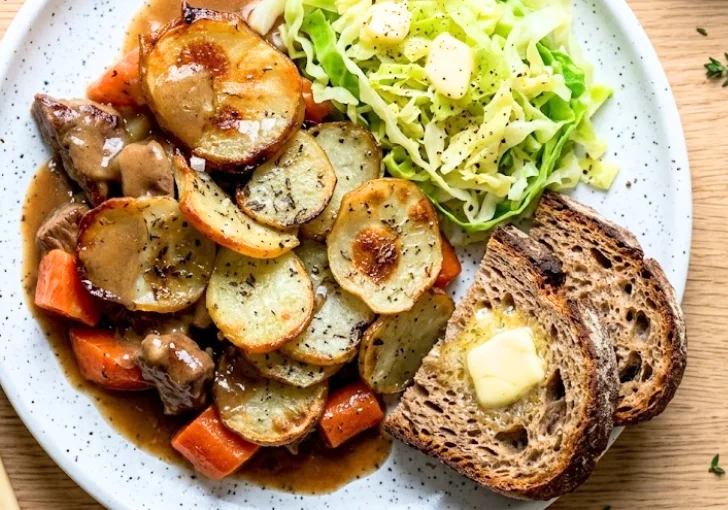
Crusty bread works well too if you want to soak up the sauce left on the plate. Pickled red cabbage gives a sharp little bite that cuts through the richness of the lamb.
On colder evenings, I sometimes add roasted parsnips beside it, and it turns into a proper hearty supper that keeps everyone full for hours.
Store Leftover & Reheat
Leftover
Let the hotpot cool fully before storing it.
Place leftovers into an airtight container and keep them in the fridge for up to 3 days. The flavour actually gets deeper after a night in the fridge, so leftovers taste really good the next day. You can also freeze portions for up to 2 months. Just thaw overnight in the fridge before reheating.
Reheat
For the best texture, reheat the hotpot in the oven at 180°C until piping hot. This keeps the potato topping crisp instead of soggy. If using a microwave, cover loosely and heat in short bursts while stirring the filling halfway through.
Mary Berry Lancashire Hotpot Recipe FAQs
Can I make Lancashire hotpot ahead of time?
Yes, and I honestly think it tastes even better after sitting overnight. You can prepare the full dish earlier in the day, keep it covered in the fridge, then bake it later. It also reheats very well without losing flavour or texture.
What potatoes work best for Lancashire hotpot?
Floury potatoes work best because they soften nicely while still crisping on top. I normally use Maris Piper or King Edward. Waxy potatoes tend to stay firm and don’t give that classic golden topping people expect from a proper hotpot.
Can I use lamb leg instead of shoulder?
Yes, lamb leg works perfectly fine. I’ve tried both many times. Lamb shoulder gives a slightly richer taste because of the extra fat, but lamb leg still turns tender after slow cooking and makes a lovely hotpot.
Why is my potato topping not crispy?
This usually happens if the potatoes hold too much moisture or if the oven temperature stays too low at the end. Removing the foil and turning up the heat during the final bake helps the top become golden and crisp.
Can I freeze Lancashire hotpot?
Yes, this dish freezes well. Let it cool first, then store it in freezer-safe containers. Freeze for up to 2 months. Thaw overnight in the fridge before reheating in the oven until hot right through.
Is Lancashire hotpot meant to be thick or soupy?
It should have a rich gravy, not a thin watery sauce. The flour helps thicken the stock during cooking. If your hotpot looks too runny, uncover it for a bit longer in the oven so some liquid reduces naturally.
How thin should I slice the potatoes?
Try to slice them quite thin, around a few millimetres thick. Thin slices cook evenly and become crisp at the edges. Thick potato slices can stay firm even after the full baking time.
Can I cook this in a slow cooker?
Yes, but I still prefer finishing it in the oven for the crispy potato topping. You can cook the lamb filling slowly in a cooker first, then transfer everything into a baking dish and add the potatoes before baking.
Mary Berry Lancashire Hotpot Recipe (Rich Lamb & Crispy Potatoes)
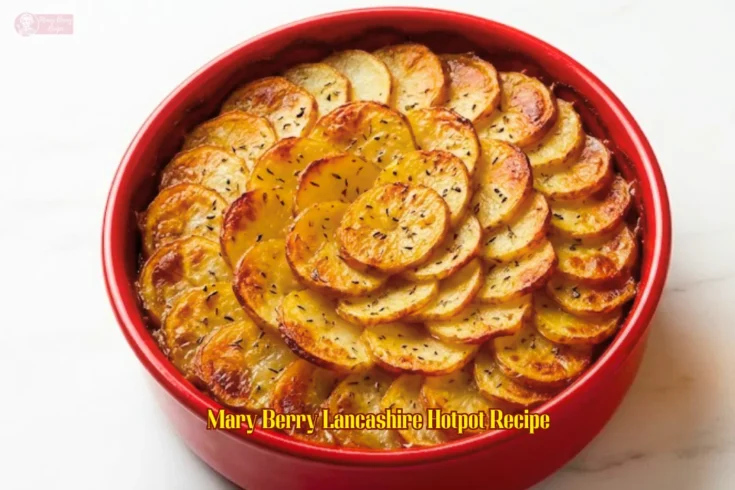
This Mary Berry Lancashire Hotpot Recipe turns simple ingredients into a rich and comforting lamb dinner with tender meat, deep onion gravy, and crispy golden potatoes on top. I made this homemade Lancashire hotpot after spotting it in an old cookbook, and it quickly became one of those cozy meals worth making again during colder months. The steps stay easy to follow, even for newer home cooks, and the slow oven cooking does most of the work for you. Serve this classic lamb hotpot with buttered peas, cabbage, or warm crusty bread to soak up the lovely gravy.
Ingredients
- 2 tbsp butter, divided
- 1 tbsp vegetable oil
- 700g diced lamb shoulder or lamb leg
- 2 medium brown onions, thinly sliced
- 1 heaped tbsp plain flour
- 500ml hot chicken stock or lamb stock
- Salt and freshly ground black pepper, to taste
- 2 bay leaves
- 1 tbsp Worcestershire sauce
- 3 medium carrots, peeled and roughly chopped
- 800g–1kg potatoes, peeled and thinly sliced
- 1 tsp dried thyme
Instructions
- Prepare the Oven and Brown the Lamb – Preheat the oven to 180°C fan / 200°C conventional. Heat 1 tbsp butter together with the vegetable oil in a large frying pan over a high heat. Add the diced lamb and fry for 3–4 minutes, stirring occasionally, until browned all over. Proper browning adds depth and richness to the finished hotpot. Remove the lamb from the pan and set aside.
- Cook the Onions – Add the sliced onions to the same pan and cook for 3–4 minutes until softened and lightly golden. Stir regularly so the onions cook evenly and pick up the flavour left in the pan from the lamb.
Build the Gravy – Return the browned lamb to the pan with the onions. Sprinkle over the plain flour and stir well so the flour coats the meat evenly. Slowly pour in the hot stock while stirring continuously to create a smooth gravy. Season generously with salt and black pepper, then add the bay leaves and Worcestershire sauce. Bring everything to a gentle boil. - Start the Initial Oven Cooking – Cover the pan with a lid or tightly with foil and place in the oven for 30 minutes. This allows the lamb to begin tenderising and the flavours to develop before assembling the final hotpot.
- Prepare the Carrots and Assemble the Dish – While the lamb cooks, peel and roughly chop the carrots. Remove the lamb mixture from the oven and pour it into a large casserole dish. Stir in the chopped carrots evenly throughout the stew. Arrange the sliced potatoes over the top, starting from the outside edge of the dish and overlapping the slices as you work towards the centre. Creating neat overlapping layers helps the potatoes cook evenly and form the classic hotpot topping.
- Add Butter and Thyme – Melt the remaining butter and brush it over the potato slices to help them become crisp and golden during baking. Sprinkle the dried thyme evenly over the top for added flavour and aroma.
- Bake the Hotpot – Cover the casserole dish tightly with foil and bake for 1 hour. This allows the potatoes to soften while the lamb continues to become tender underneath.
- Crisp the Potato Topping – After 1 hour, remove the foil and increase the oven temperature to high, around 220°C conventional. Return the dish to the oven and cook for a further 30 minutes until the potatoes are golden brown and crisp around the edges.
- Serve – Remove the hotpot from the oven and allow it to rest for a few minutes before serving. The lamb should be tender, the gravy rich and savoury, and the potato topping crisp and deeply golden. Serve hot on its own or with buttered seasonal vegetables.
Nutrition Information:
Serving Size:
1 generous portionAmount Per Serving: Calories: 520
This Mary Berry Lancashire Hotpot Recipe has become one of those meals I keep coming back to every cold season. It’s simple, filling, and full of proper homely flavour without needing fancy ingredients.
The tender lamb, rich gravy, and crisp potato topping work so well together, and the whole dish feels comforting from the first bite.
I really hope you give this recipe a try in your own kitchen. Once you smell it baking away, you’ll understand why this old British classic never goes out of style.