
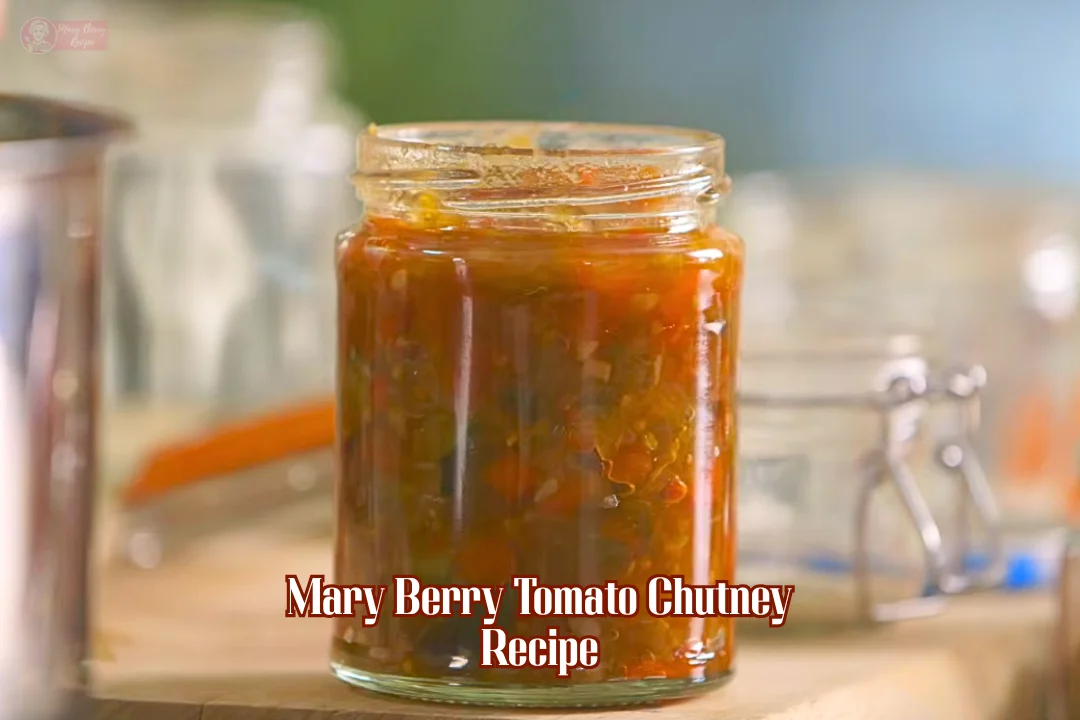
Mary Berry Tomato Chutney Recipe (my family loved it)
There is something lovely about autumn arriving and the last of the summer vegetables filling the kitchen. The garden can suddenly give you more tomatoes, peppers and other vegetables than you can eat fresh. Some tomatoes may be a little too ripe for the salad bowl, but they are just right for making a good homemade chutney.
That is where this Mary Berry Tomato Chutney Recipe comes in. Today, I’m sharing the recipe and method I use to turn an autumn harvest of ripe tomatoes and fresh vegetables into a rich, sweet and tangy tomato chutney.
I really like the way this chutney comes together. The tomatoes go into the pan first, followed by peppers, onions, courgette, aubergine and garlic.
Fresh ginger and chilli bring a bit of warmth, while paprika and crushed mustard seeds add more flavour. Then comes the distilled malt vinegar and sugar, giving the chutney that lovely sharp and sweet taste.
The best part is watching it change as it cooks. At first, it looks like a pan full of chopped autumn vegetables. After a good simmer and slow reduction, everything softens and turns into a thick, glossy chutney.
I make this for serving with mature Cheddar, cold meats, sandwiches and a simple ploughman’s lunch. It is a lovely way to make the last of the harvest last a little longer.
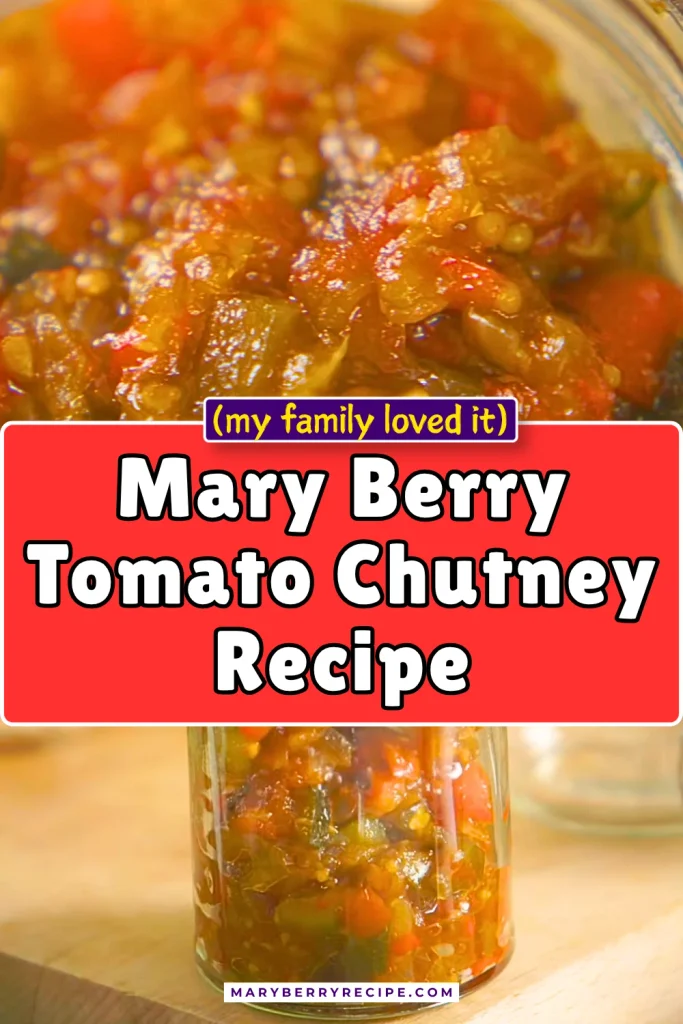
Why This Mary Berry Tomato Chutney Is Worth Making – My Personal Review
I’m very fond of this chutney because it tastes like a proper homemade preserve rather than a jar of sweet tomato sauce.
The vegetables give it body, while the malt vinegar brings that familiar sharp note I expect from a good British chutney.
I’ve tried tomato chutneys that are either far too sugary or so vinegary that they take over the whole plate. This one sits somewhere in the middle.
The aubergine and courgette make it hearty, while the ginger, chilli and mustard seeds give it a bit more character.
It does take a little time to cook down, but I think that is where the good flavour comes from. Once it is in a jar, you have something handy for sandwiches, cheese boards and cold lunches.
How To Choose The Best Tomatoes for This Tomato Chutney
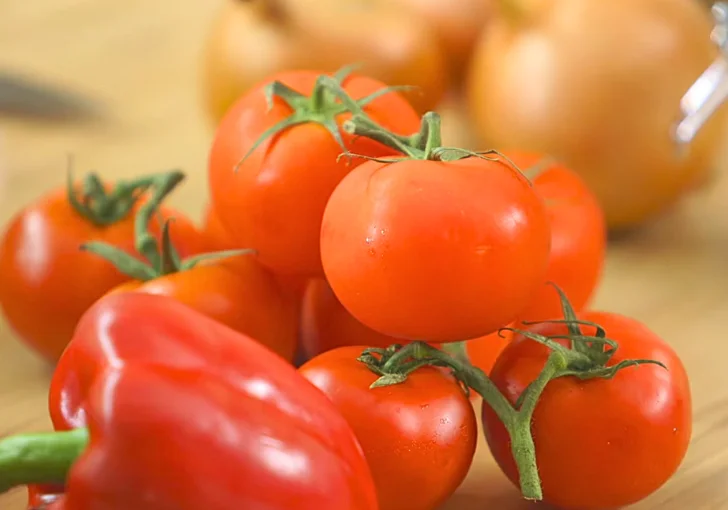
Go for ripe, deep red tomatoes with a bit of weight to them, and don’t worry if they look past their best. Soft tomatoes are ideal here.
They break down quicker and carry more flavour than firm ones picked too early.
Plum tomatoes work beautifully because they hold less water and more flesh, so your chutney thickens faster. Beef tomatoes are fine too, though you’ll be chopping for longer.
Salad tomatoes and those little cherry ones on the vine are watery, and you’ll stand over the pan far longer waiting for the liquid to cook off.
I usually pick up a bag of reduced ripe tomatoes from the shop. Cheap, soft and perfect for the job. Tinned tomatoes can fill a gap, but fresh gives a much brighter taste.
Perfect For
- Using up a tomato glut when the greenhouse or the veg box gives you far more than you can eat.
- Cheese lovers who want something proper to go with a wedge of mature cheddar.
- Homemade gifts, especially at Christmas. A jar with a cloth lid and a handwritten label always goes down well.
- Packed lunches, because a spoonful turns a plain ham sandwich into something you look forward to.
- Beginners, since there’s no jam thermometer and no setting point to worry about.
- Batch cooking days, when you want one pan on the hob doing its thing while you get on with other jobs.
- Anyone sick of shop jars that cost a fortune and taste mostly of sugar.
Mary Berry Tomato Chutney Ingredients
900 g ripe tomatoes – The heart of the whole thing. Ripe ones give sweetness and enough juice to get the other veg cooking without adding water. Soft, deep red tomatoes work best. Reduced bags from Tesco or Sainsbury’s are perfect and save you a few quid.
3 peppers, chopped – Peppers bring colour and a mellow sweetness once they soften. Use red, orange or yellow for a sweeter result, or throw in a green one for a slightly sharper edge. Mixed packs from Aldi or Lidl do the job nicely.
3 medium onions, chopped – Onions give the chutney its savoury backbone and cook down into the sauce. Plain brown onions are all you need. Red onions turn a little sweeter if that’s what you have in the cupboard. Chop them small and even.
1 courgette, chopped – Courgette softens right down and helps bulk out the mixture without taking over the flavour. It also keeps the texture soft rather than chunky. Any ordinary green courgette works. No need to peel it, just top and tail.
1 aubergine, chopped – This is the one that surprises people. Aubergine melts into the chutney and gives it that thick, glossy body you get in good shop jars. Pick one that feels firm with shiny skin. Chop it small so it breaks down properly.
4 garlic cloves, chopped or crushed – Garlic adds warmth and depth underneath all the sweetness. Four cloves sounds like plenty, but it mellows right out during the long simmer. Fresh bulbs beat the jarred stuff here. A garlic crusher saves a bit of faff.
Fresh ginger, grated – Ginger lifts the whole pan and gives that gentle heat at the back of your throat. Grate it on the fine side of the box grater so it disappears into the mix. A thumb-sized piece is about right for most tastes.
1 fair-sized fresh chilli, chopped – The chilli brings a bit of a kick without turning the chutney into something fiery. Leave the seeds in for more heat, take them out for less. Ordinary red chillies from the supermarket suit this perfectly well.
1 tbsp paprika – Paprika deepens the colour and adds a soft, smoky warmth that plain tomatoes can’t give on their own. Sweet paprika is the one to use. Schwartz do a decent jar. Smoked paprika works too if you fancy it.
1 tbsp salt – Salt does more than season. It pulls moisture from the veg and sharpens every other flavour in the pan. A tablespoon looks like a lot, but across 2.5 kg of vegetables it’s about right. Ordinary table or sea salt, either is fine.
Black pepper, to taste – Freshly ground pepper adds a gentle bite that sits nicely against the sugar. Grind it straight into the pan near the end of cooking so it keeps its punch. Pre-ground works, though the flavour fades much faster in the jar.
Crushed mustard seeds – Mustard seeds give that sharp, tangy note you expect from a proper British chutney. Crush them in a pestle and mortar to release the oils. Yellow or brown both work. Bart and Schwartz both sell small jars in most shops.
300 ml distilled malt vinegar – This is your preserving agent, so don’t skip it or cut it down. Distilled malt vinegar keeps the colour clear and tastes sharp and clean. Sarson’s is the one most of us grew up with and it’s exactly right for this.
350 g granulated sugar – Sugar balances all that vinegar and helps the chutney thicken and keep. Ordinary white granulated is what Mary uses. Silver Spun or Tate & Lyle, doesn’t matter. Weigh it properly rather than guessing, it makes a real difference.
Ingredient Notes & Smart Substitutions
- Vegetable weight matters more than the exact veg. Keep your total vegetables around 2.5 kg and you can swap things about. Marrow, squash, celery or runner beans all fit in happily.
- No aubergine in the shop? Use an extra courgette or a chunk of marrow. You’ll lose a little of that silky texture, but the chutney still works.
- Malt vinegar can be swapped for cider vinegar if you want something fruitier. White wine vinegar gives a lighter, gentler result. Balsamic is too sweet and stains the colour.
- Granulated sugar can become light brown sugar for a deeper, treacly taste. Dark muscovado turns it almost black, so use it sparingly.
- Dried chilli flakes stand in for fresh chilli. Start with half a teaspoon and taste as you go.
- Ground ginger works at a push, about a teaspoon, though fresh has far more life to it.
- Mustard powder replaces the seeds if that’s what you’ve got. You’ll miss the little pops, but the tang comes through.
How To Make Mary Berry Tomato Chutney as a Beginner
Step 01 – Prepare the Tomatoes
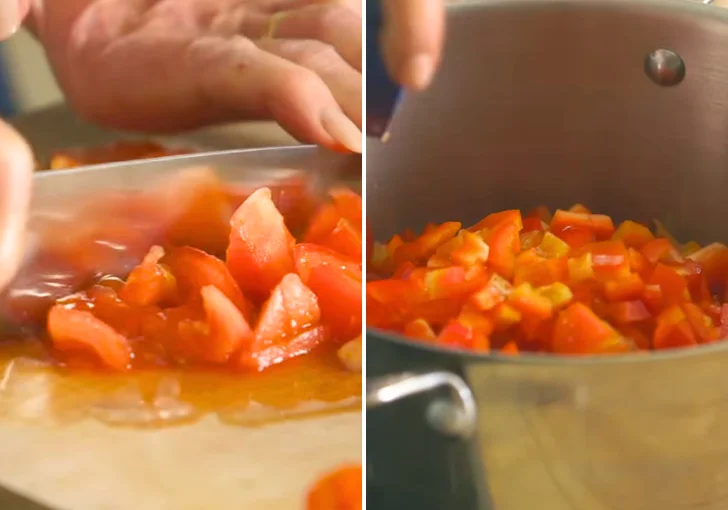
Bring a pan of water to the boil. Blanch the tomatoes briefly, then remove the skins and chop the tomatoes. Measure out 900 g of prepared tomatoes. Put the chopped tomatoes into a large, heavy-based saucepan first, as the tomatoes provide moisture for the other vegetables while the chutney begins cooking.
Step 02 – Prepare the Vegetables
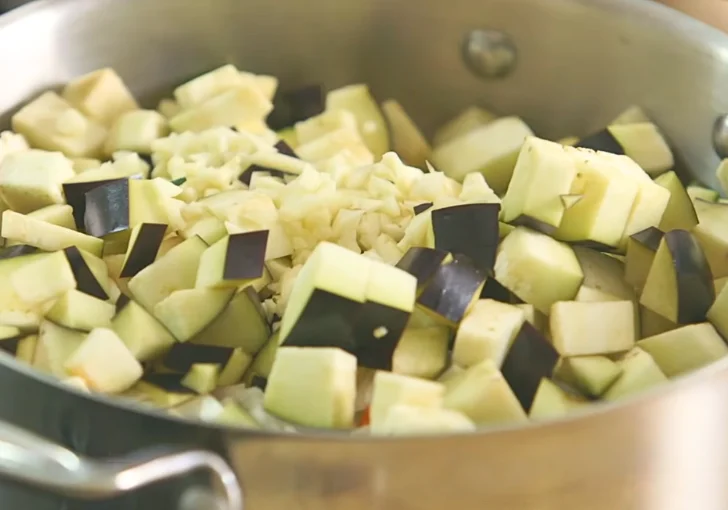
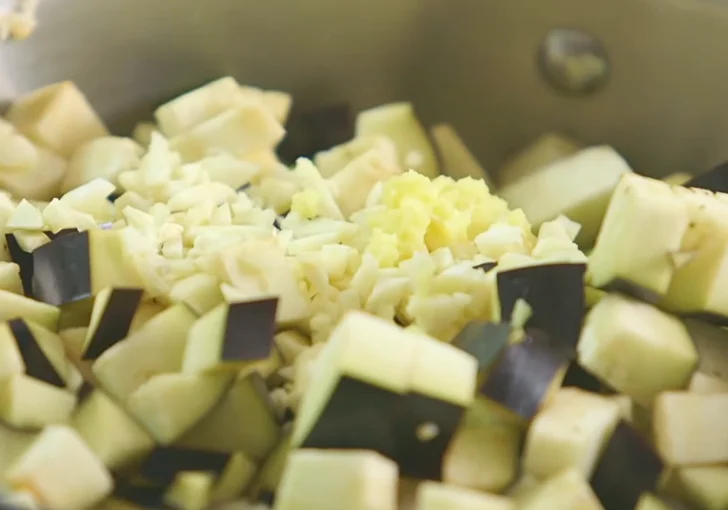
Chop the three peppers, three medium onions, courgette and aubergine into small, fairly even pieces. Chop or crush the four garlic cloves. Add all the prepared vegetables to the saucepan with the tomatoes. Grate in the fresh ginger and add one fair-sized fresh chilli, chopped finely. Adjust the amount of chilli according to how hot you want the chutney to be.
Step 03 – Check the Vegetable Quantity
Make sure the total weight of the vegetables is around 2.5 kg. The recipe allows flexibility with the vegetables, so additional or alternative vegetables can be used if necessary, provided the overall vegetable weight stays around 2.5 kg.
Step 04 – Cook the Vegetables
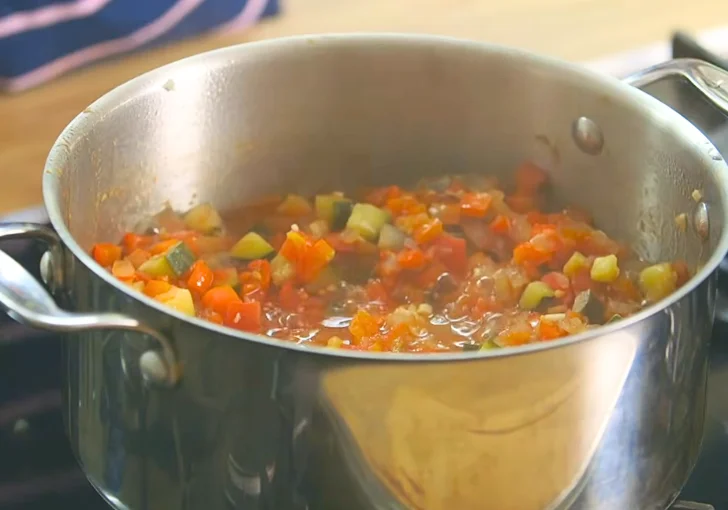
Place the saucepan over a low heat and begin cooking the vegetables gently. Leave the mixture to simmer for about 1 hour, stirring occasionally so the vegetables cook evenly and do not stick to the bottom of the pan. Continue until the vegetables have softened and the mixture has started to develop a thick, chutney-like appearance.
Step 05 – Add the Seasonings
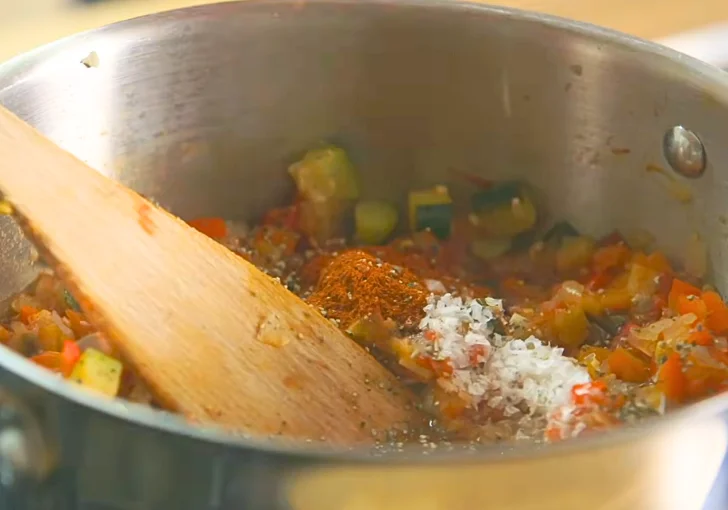
Once the vegetables have cooked for about an hour, add 1 tablespoon of paprika and 1 tablespoon of salt. Add black pepper to taste. Crush mustard seeds and stir them into the pan to give the chutney a more pronounced, piquant flavour.
Step 06 – Add the Vinegar and Sugar
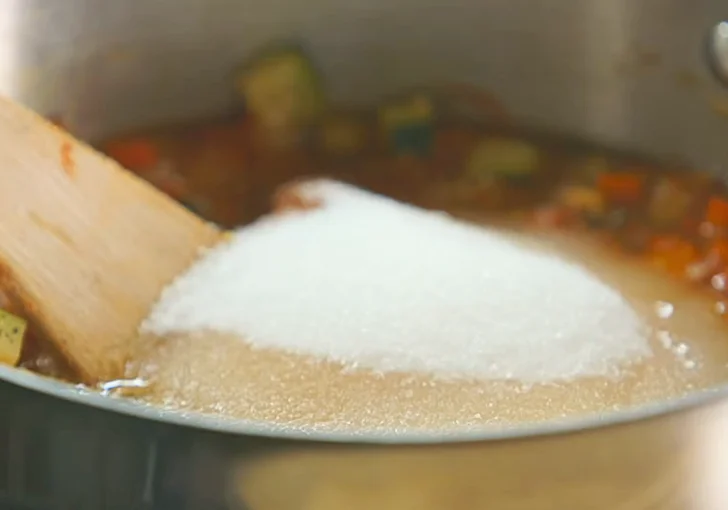
Pour in 300 ml of distilled malt vinegar and add 350 g of granulated sugar. Stir the mixture thoroughly so the vinegar and sugar are evenly distributed throughout the vegetables.
Step 07 – Dissolve the Sugar
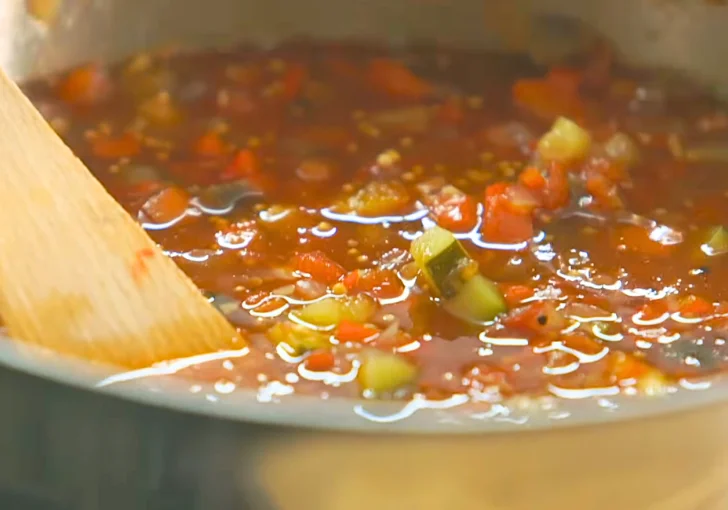
Keep the mixture over the heat and stir until the sugar has completely dissolved. Once dissolved, increase the heat and bring the chutney to the boil.
Step 08 – Reduce the Chutney
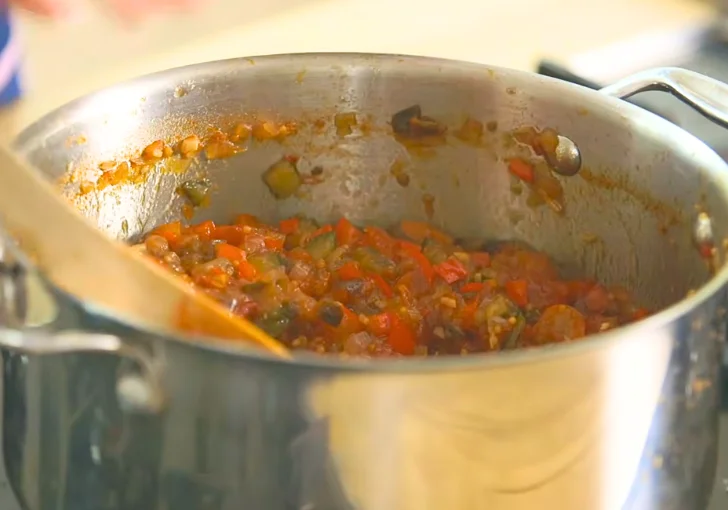
Allow the chutney to boil and reduce until it reaches a thick chutney consistency. Stir regularly while it reduces, taking particular care that the mixture does not catch or burn on the bottom of the saucepan. Continue cooking until there is no runny liquid remaining at the bottom and the mixture is thick enough to hold its shape.
Step 09 – Check the Consistency
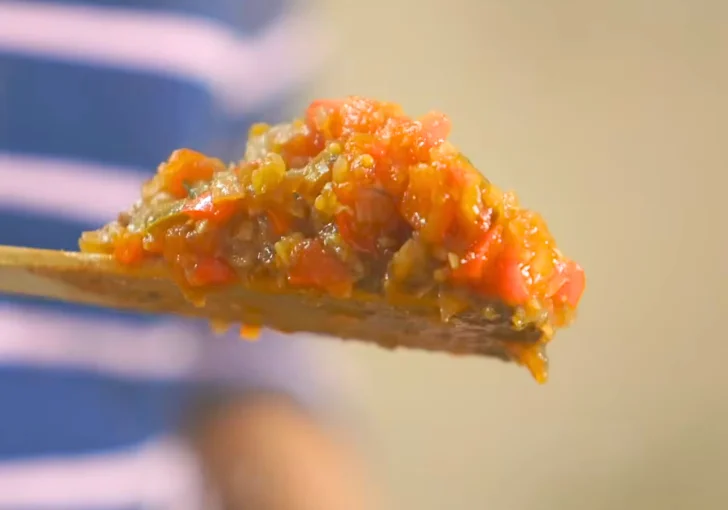
Turn off the heat once the chutney has reached the correct consistency. The finished chutney should be thick rather than watery, with the vegetables softened and combined into a cohesive mixture. There should be no loose liquid sitting at the bottom of the pan.
Step 10 – Fill the Sterilised Jars
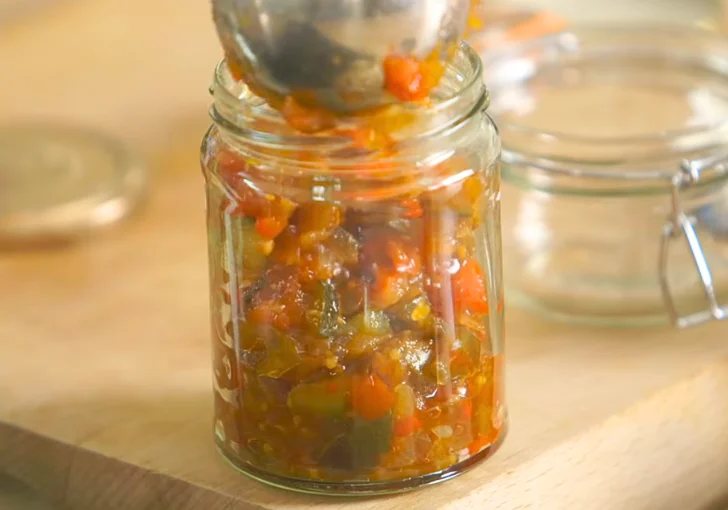
Have a selection of sterilised jars ready before filling. Carefully spoon the hot chutney into the jars, pressing it down as you fill so the mixture settles properly. Check the filled jars for visible air bubbles and push the chutney down to remove them.
Step 11 – Seal and Store
Seal the jars securely while the chutney is hot. When properly sealed, the chutney can keep for up to 2 years. Once a jar has been opened, keep it refrigerated.
How to Know the Tomato Chutney Is Actually Ready
The clearest sign is no free liquid left in the pan. Start checking after the chutney has been boiling for around thirty minutes.
Drag a wooden spoon straight across the base. If the channel holds open for a second or two before the mixture creeps back in, it’s done. If vinegar rushes in to fill the gap, keep cooking.
The surface should look glossy and thick, and the bubbles will be slow and heavy rather than quick and watery.
Remember it firms up a bit more as it cools, so stop just before it looks too stiff.
Tips & Notes for Perfect Mary Berry Tomato Chutney
- Use your biggest, heaviest pan. A thin pan burns on the base and you’ll taste it in every jar.
- A wooden spoon beats metal for scraping the bottom as the chutney thickens.
- Open a window. The vinegar smell is strong for the first twenty minutes.
- Chop everything before you turn the hob on. It makes the whole job feel far less rushed.
- Don’t taste it straight from the pan and panic. Fresh chutney tastes very sharp. It mellows over four to six weeks in the jar.
- Use vinegar-proof lids. Plain metal lids corrode and let air in.
- Label every jar with the date. You will forget otherwise, I certainly do.
- If it thickens too far, stir in a splash of hot water and take it off the heat.
How to Sterilise Jars & Store Mary Berry Tomato Chutney
Wash your jars and lids in hot soapy water, then rinse them well. Stand them on a baking tray and put them in the oven at 140°C for fifteen minutes.
Boil the lids in a pan of water for five minutes. Keep everything hot until you fill them, as cold glass can crack with hot chutney and warm jars seal far better.
Fill straight from the pan, seal immediately, and don’t touch the rims or the inside of the lids with your fingers after sterilising. Sealed and stored somewhere cool and dark, your chutney keeps for up to 2 years.
Mistakes That Can Ruin Your Tomato Chutney
- Cooking on too high a heat at the start. The base catches and the whole batch tastes burnt.
- Skipping the stirring near the end. Once the sugar is in, it sticks fast.
- Cutting down the vinegar. It’s what preserves the chutney. Less vinegar means mould.
- Filling cold jars. They crack, and the seal fails.
- Stopping while it’s still runny. You’ll end up with watery chutney that never thickens in the jar.
- Eating it the same week. It needs a month in the cupboard to taste right.
Mary Berry Tomato Chutney Variations You Can Try
Smoky Tomato Chutney – Swap sweet paprika for smoked. It gives the jars a deeper, barbecue sort of warmth that goes brilliantly with sausages and burgers.
Green Tomato Chutney – Use unripe green tomatoes at the end of the growing season. Sharper, firmer and a proper old-fashioned British preserve.
Spiced Apple and Tomato Chutney – Add two peeled, chopped Bramley apples with the veg. The apple breaks down completely and brings a soft fruity sweetness.
Hot Chilli Tomato Chutney – Use three chillies with the seeds left in, or add a teaspoon of chilli flakes. Good with cold roast beef and strong cheddar.
Sultana and Ginger Chutney – Stir a large handful of sultanas in with the vinegar, and double the ginger. The sultanas plump up and give you little bursts of sweetness.
What to Enjoy With This Mary Berry Tomato Chutney
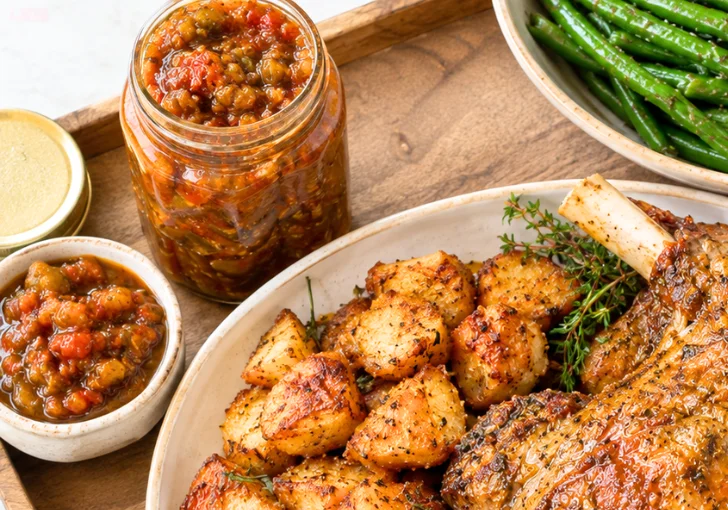
This chutney is one of those jars I like to keep within easy reach just like the strawberry jam. A spoonful with mature Cheddar is probably my favourite way to eat it. The sharp vinegar works so well with the salty cheese.
It is also lovely with cold roast beef, ham or leftover chicken. Add some to a cheese sandwich with a little lettuce and you have a very good lunch.
For a simple ploughman’s plate, serve it with crusty bread, cheese, sliced apple and a few pickles. It also works beside sausage rolls, pork pies and savoury tarts.
I’d even serve a small spoonful with a jacket potato and cheese. It gives a plain meal a much-needed lift.
Storing Leftovers & Freezing Instruction
Storing Leftovers
Once you open a jar, keep it in the fridge. Always use a clean spoon when serving. Don’t put a used knife or spoon back into the jar. Keep the lid firmly closed when the chutney is not being used.
If you notice mould, an unusual smell, bubbling that was not present before or any other clear sign of spoilage, discard the chutney rather than trying to remove the affected part.
Freezing
I don’t usually freeze chutney because it is made as a preserve and the texture can change after freezing. If you do have a portion you need to keep, place it in a clean, freezer-safe container with a little room at the top for expansion.
Label it with the date and thaw it in the fridge.
Mary Berry Tomato Chutney Recipe FAQs
How long should I leave the chutney before eating it?
Give it at least four weeks in a cool dark cupboard, and six is better. Straight from the pan it tastes harsh and vinegary. Over those weeks the flavours settle, the sharpness softens and the sweetness comes forward. Patience genuinely makes the difference between decent chutney and really good chutney.
Why is my chutney still runny?
You’ve stopped cooking it too soon. Chutney thickens only when the liquid boils away, and that takes longer than most people expect. Put it back on the hob, bring it to a steady boil and stir often. Keep going until no vinegar pools at the bottom when you drag a spoon across.
Can I use tinned tomatoes instead of fresh?
You can, though the result tastes flatter and takes longer to thicken because tinned tomatoes carry more liquid. Drain them well first and use around 900 g of drained flesh. Fresh ripe tomatoes give a brighter, fuller flavour, so I’d only reach for tins if fresh ones are hard to come by.
Do I really have to skin the tomatoes?
Yes, it’s worth the extra ten minutes. Tomato skins don’t break down during cooking. They curl up into tough little strips and ruin the smooth texture you’re after. Blanching makes them slip off easily, so cut a small cross in the base before dropping them into boiling water.
My chutney has gone mouldy on top, can I save it?
No, throw the jar away. Mould sends roots down through the chutney even when you can only see it on the surface. It usually happens because a jar wasn’t sterilised properly, the seal failed, or a dirty spoon went in. Start fresh and be strict about clean jars next time.
What kind of jars should I use?
Any clean glass jar with a vinegar-proof lid works well. Old jam and pickle jars are ideal if the lids are still in good shape with an intact plastic coating inside. Plain metal lids corrode against the vinegar over time, which spoils the chutney and lets air creep in.
Can I halve the recipe?
Absolutely, just halve everything including the vinegar and sugar. Keep the ratios the same or the preserving will suffer. A smaller batch thickens quicker, so start checking the consistency earlier than the recipe suggests. It’s a sensible way to try it before committing to a full 2.5 kg of vegetables.
Is this chutney very spicy?
Not at all, one chilli across this much veg gives gentle warmth rather than real heat. Most people taste the sweetness and tang long before they notice the chilli. If you want it milder, take the seeds out. If you want a proper kick, use two or three chillies with seeds in.
Can I make this in a slow cooker?
Partly. You can soften the vegetables in a slow cooker on low for four hours, but you’ll still need to move the mixture to a pan afterwards. The final reduction needs a hard boil with the lid off, and a slow cooker traps too much steam to get the chutney thick.
Why does my chutney taste too vinegary?
It’s almost certainly too young. Chutney needs those weeks in the jar for the vinegar to mellow, so give it time before deciding. If it’s been six weeks and still bites, you may have used more vinegar than the 300 ml stated, or boiled it for a shorter time than needed.
Can I reduce the sugar?
I wouldn’t cut it by much. Sugar isn’t just there for sweetness, it helps thicken the chutney and preserve it alongside the vinegar. Dropping below about 300 g will give you a thinner result with a shorter shelf life. If you want less sweetness, use light brown sugar instead.
How many jars does this make?
You’ll get around six to seven standard 340 g jars from a full batch, depending on how far you reduce the mixture. Have a few extra jars sterilised and ready just in case, since the last thing you want is hot chutney sitting in the pan while you scrub out another one.
Mary Berry Tomato Chutney Recipe (my family loved it)
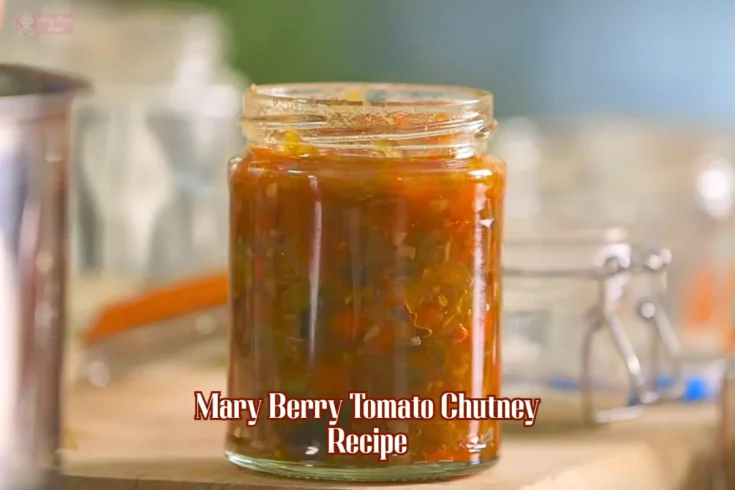
Make this easy Mary Berry Tomato Chutney Recipe with ripe tomatoes, peppers, onions, courgette, aubergine, ginger and chilli. It takes about 2½ hours, but most of the time is gentle cooking. I love the thick, sweet and tangy finish. Once ready, spoon it beside sharp Cheddar, cold meats, sandwiches or a ploughman’s lunch for an easy homemade treat.
Ingredients
- 900 g ripe tomatoes
- 3 peppers, chopped
- 3 medium onions, chopped
- 1 courgette, chopped
- 1 aubergine, chopped
- 4 garlic cloves, chopped or crushed
- Fresh ginger, grated, amount not specified in the video
- 1 fair-sized fresh chilli, chopped
- 1 tbsp paprika
- 1 tbsp salt
- Black pepper, to taste
- Crushed mustard seeds, amount not specified in the video
- 300 ml distilled malt vinegar
- 350 g granulated sugar
Instructions
- Bring a pan of water to the boil. Blanch the tomatoes briefly, then remove the skins and chop the tomatoes. Measure out 900 g of prepared tomatoes.
- Put the chopped tomatoes into a large, heavy-based saucepan first, as the tomatoes provide moisture for the other vegetables while the chutney begins cooking.Chop the three peppers, three medium onions, courgette and aubergine into small, fairly even pieces. Chop or crush the four garlic cloves. Add all the prepared vegetables to the saucepan with the tomatoes. Grate in the fresh ginger and add one fair-sized fresh chilli, chopped finely. Adjust the amount of chilli according to how hot you want the chutney to be.
- Make sure the total weight of the vegetables is around 2.5 kg. The recipe allows flexibility with the vegetables, so additional or alternative vegetables can be used if necessary, provided the overall vegetable weight stays around 2.5 kg.
- Place the saucepan over a low heat and begin cooking the vegetables gently. Leave the mixture to simmer for about 1 hour, stirring occasionally so the vegetables cook evenly and do not stick to the bottom of the pan. Continue until the vegetables have softened and the mixture has started to develop a thick, chutney-like appearance.
- Once the vegetables have cooked for about an hour, add 1 tablespoon of paprika and 1 tablespoon of salt. Add black pepper to taste. Crush mustard seeds and stir them into the pan to give the chutney a more pronounced, piquant flavour.
- Pour in 300 ml of distilled malt vinegar and add 350 g of granulated sugar. Stir the mixture thoroughly so the vinegar and sugar are evenly distributed throughout the vegetables.
- Keep the mixture over the heat and stir until the sugar has completely dissolved. Once dissolved, increase the heat and bring the chutney to the boil.
- Allow the chutney to boil and reduce until it reaches a thick chutney consistency. Stir regularly while it reduces, taking particular care that the mixture does not catch or burn on the bottom of the saucepan. Continue cooking until there is no runny liquid remaining at the bottom and the mixture is thick enough to hold its shape.
- Turn off the heat once the chutney has reached the correct consistency. The finished chutney should be thick rather than watery, with the vegetables softened and combined into a cohesive mixture. There should be no loose liquid sitting at the bottom of the pan.
- Have a selection of sterilised jars ready before filling. Carefully spoon the hot chutney into the jars, pressing it down as you fill so the mixture settles properly. Check the filled jars for visible air bubbles and push the chutney down to remove them.
- Seal the jars securely while the chutney is hot. When properly sealed, the chutney can keep for up to 2 years. Once a jar has been opened, keep it refrigerated.
Nutrition Information:
Serving Size:
1 tablespoon (about 20 g)Amount Per Serving: Calories: 15Sodium: 100mg
I hope you give this Mary Berry Tomato Chutney Recipe a place in your kitchen.
It does take a bit of chopping and a good amount of cooking time, but the result is worth it.
I love the mix of sweet tomatoes, soft vegetables, malt vinegar, ginger and a little chilli.
Keep a jar beside your favourite cheese and you’ll soon see why I make it.