
Mary Berry Xmas Cake Recipe (rich fruit cake)
For me, Christmas baking doesn’t feel quite right without a traditional fruit cake waiting in the kitchen. This Mary Berry Xmas Cake Recipe is just the sort of bake I love to prepare ahead of the festive season.
It’s packed with raisins, currants, sultanas and glacé cherries, with orange zest, mixed spice and brandy bringing all those lovely Christmas flavours together.
This is a proper British fruit cake. It’s dark, rich and packed with dried fruit, held together by just enough buttery batter.
Bakers have made it for generations, weeks ahead, so the flavour can mellow. Mary Berry made it a household favourite with her clear, no-fuss method.
I love how it waits for you. Sneak a thin slice with a cuppa on a cold holiday afternoon. Warm it up, pour over custard and nobody will guess it’s not a pudding. I’ve done that more than once.
You need a deep tin, a low oven and a bit of patience. The treacle, almonds and brandy do the rest. Finish it with marzipan and snowy royal icing, and it looks the part too.
Bake Mary Berry Christmas cake this weekend and you’ll thank yourself in this Holiday season.

Reasons I’m Obsessed With Making This Xmas Cake Every Holiday
It tastes like Christmas: I love the mix of juicy dried fruit, orange zest and warm spice. Every slice has that familiar festive flavour.
I can make it ahead: Unlike a sponge cake, this fruit cake gives me time to prepare the rest of the Christmas meal.
The brandy adds depth: A little brandy brings warmth to the fruit. I can also leave it out for a different version.
It keeps its rich texture: The dense crumb makes this cake lovely for serving in thin slices with a cup of tea.
I can decorate it my way: Marzipan and royal icing give it a classic finish, but a simple dusting of icing sugar works too.
Things You Need to Know Before Baking
Use a deep, lined tin because the cake bakes for hours and needs protection. Parchment on the base and sides stops the edges drying out or catching.
Keep your oven low, 140°C conventional or 120°C fan, so the dense fruit cooks through before the top burns.
Don’t panic if the mixture looks split after the eggs go in. Cold eggs cause that, and the flour fixes it.
Let the cake cool completely before you add extra brandy, or the alcohol just steams away.
Last thing: this recipe has alcohol, nuts and eggs. If you’re baking for guests with allergies or little ones, plan your swaps now. Trust me, a bit of prep makes the bake easy.
Mary Berry Xmas Cake Ingredients
For the brandy-soaked fruit
600 g raisins – Raisins make up the bulk of the cake and bring a soft, jammy sweetness. I go for plump ones, and Sun-Maid or Tesco own-brand soak up brandy beautifully. Check the packet for stalks, as they sneak in sometimes.
400 g currants (or 400 g extra raisins) – Currants are small, dark and slightly tart, which gives the cake that traditional Christmas taste. Whitworths and Waitrose both sell them in most shops. Can’t find any? Use extra raisins. The cake will be a touch sweeter, but still lovely.
200 g sultanas – Sultanas are lighter and juicier than raisins. They balance the darker fruit and keep every slice moist. I like Sun-Maid or Whitworths. Any supermarket pack works, just pick ones that feel soft and not dried out.
200 g glaçé cherries, halved – Glaçé cherries add sweet, chewy bites and bright red pops through each slice. Rinse them under cold water and dry well, or they sink to the bottom. Opies and Whitworths are reliable, and supermarket own-brand works well too.
Finely grated zest of 2 oranges – Zest from 2 oranges adds fresh citrus oils that lift all that heavy fruit. Use unwaxed oranges if you can, and grate only the orange skin. The white pith tastes bitter. A fine Microplane grater makes it quick.
150 ml brandy, plus extra for feeding the cake – Brandy soaks into the fruit, adds warmth and helps the cake keep for weeks. I use Courvoisier or Rémy Martin, but a supermarket brandy like Tesco or Sainsbury’s own works fine. Buy a bit extra for feeding the cake later.
For the cake mixture
250 g unsalted butter, softened – Butter gives the cake its rich flavour and tender crumb. Take it out of the fridge a few hours ahead so it beats easily. Lurpak, Anchor and Waitrose unsalted all work well, but skip spreads. They hold too much water.
250 g dark brown sugar or demerara sugar – Dark brown sugar gives a deep, toffee-like flavour. Demerara adds a slightly crunchy bite. Both work, so use what’s in your cupboard. Silver Spoon, Billington’s and Tate & Lyle are easy to find in any supermarket.
4 large eggs – Eggs bind the mixture and help the cake hold its shape. Large, free-range eggs work best. Let them come up to room temperature first, as cold eggs make the mix split. Happy Eggs and Waitrose Duchy are good picks.
2 tbsp black treacle – Black treacle gives the cake its dark colour and a bittersweet depth. Lyle’s Black Treacle is the classic choice. Dip your spoon in hot water first and the treacle slides off easily, so none gets wasted.
100 g ground almonds or finely crushed almonds – Ground almonds keep the crumb moist and add a soft, nutty richness. Supermarket own-brand is fine, or try Whitworths. You can crush whole almonds yourself, but go very fine. Check for nut allergies before baking.
1 tsp mixed spice – Mixed spice is a British blend of cinnamon, nutmeg and cloves. It gives the cake that warm, festive smell. Schwartz and Tesco own-brand are easy to find. Check the date on your jar, as old spice tastes flat and dusty.
300 g plain flour, sifted – Plain flour holds the heavy fruit in place without making the cake tough. Sift it so there are no lumps. McDougalls, Allinson and Tesco own-brand all work well. Don’t use self-raising, as the cake doesn’t need to rise much.
For the marzipan layer
2 tbsp apricot jam – Apricot jam works as glue between the cake and the marzipan, and adds a light fruity tang. Bonne Maman and Hartley’s both spread well. Sieve out any chunks so the layer stays thin and smooth.
500 g ready-made marzipan – Ready-made marzipan saves loads of time and rolls out smoothly. Odense and Silver Spoon are popular and easy to find. White or golden both taste great. Look for one with a good almond content for the best flavour.
A little icing sugar, for dusting the work surface – A light dusting stops the marzipan sticking to your worktop and rolling pin. Keep it light, as too much dries the surface. Silver Spoon and Tate & Lyle icing sugar are both fine, and you’ll need more for the royal icing.
For the royal icing
3 large egg whites, preferably pasteurised – Egg whites whip up into a firm, glossy royal icing. Pasteurised whites from a carton are safer, especially for older guests and little ones. Two Chicks is easy to find, or use fresh large eggs. Keep the bowl grease-free.
675 g icing sugar, sifted – Icing sugar makes the royal icing thick, white and easy to peak. Sift it first to avoid gritty lumps. Silver Spoon and Tate & Lyle are my go-tos. Add it a few spoonfuls at a time for a smooth, glossy finish.
1 tsp glycerine (optional) – Glycerine stops the icing setting rock hard, so slicing is much easier. It’s optional, but worth it. Look for it in the baking aisle at Tesco or Sainsbury’s. A little goes a long way, so don’t add more than a teaspoon.
1 tsp white wine vinegar – A small splash of white wine vinegar helps the icing hold its shape and gives a crisp finish. Don’t worry, you can’t taste it. Any supermarket brand does the job, and Tesco or Waitrose own-brand are easy to find.
For decoration (optional)
Red food colouring or red food gel – A little red adds a festive streak across the icing. Gel gives stronger colour without making the icing wet. Sugarflair and Wilton are popular, and Dr. Oetker liquid colours work too. Brush it on lightly and let it dry.
Edible Christmas decorations or sugar snowflakes – Edible decorations give the cake its final sparkle. Sugar snowflakes, little holly shapes or silver balls all look lovely. Dr. Oetker, Sugarflair and Lakeland sell ready-made ones. Check the pack says edible, as some cake toppers aren’t.
How To Make Mary Berry Xmas Cake
Step 01 – Prepare the dried fruit
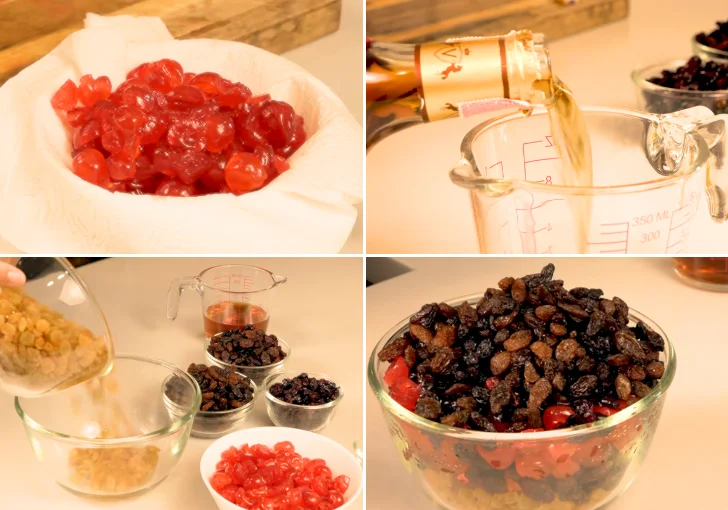
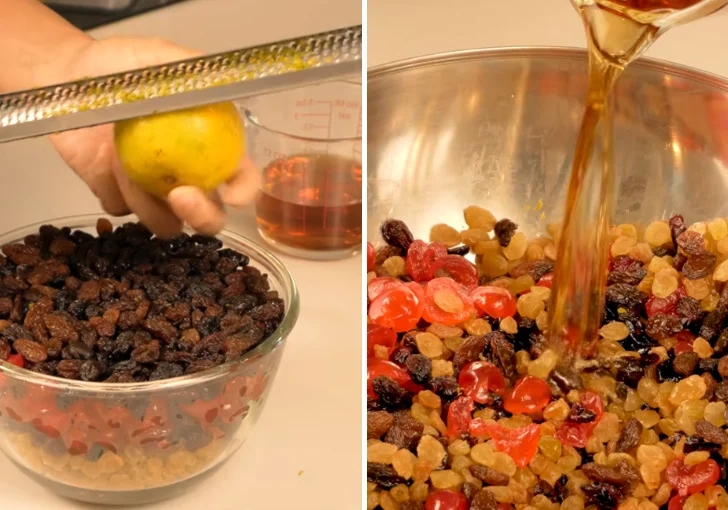
Wash the glacé cherries thoroughly under cold running water to remove excess syrup, then pat them completely dry with kitchen paper. Cut each cherry in half using a sharp knife. Weigh the raisins, currants and sultanas, and place all the dried fruit and halved cherries into a large mixing bowl.
If currants are unavailable, replace the 400 g of currants with 400 g of raisins.
Step 02 – Add the orange zest and brandy
Finely grate the zest of two oranges directly over the dried fruit, taking care to avoid the bitter white pith. Pour in 150 ml of brandy and stir thoroughly until the fruit is evenly coated. Transfer the mixture to a clean, food-safe container with a lid and leave it to soak for three days. Stir once daily to distribute the liquid.
If desired, add a small splash of extra brandy each day, ensuring the fruit remains moist rather than swimming in liquid.
Step 03 – Prepare the cake tin and oven
After the fruit has soaked for three days, prepare a deep 22 cm round cake tin. Grease the base and sides with butter, then line the base and sides with baking parchment. For a long, slow bake, preheat a conventional oven to 140°C or a fan oven to 120°C. Place a baking tray or shelf in the lower-middle part of the oven, leaving enough room for the cake tin.
The low temperature helps the dense fruit mixture cook through without over-browning the surface.
Step 04 – Cream the butter and sugar
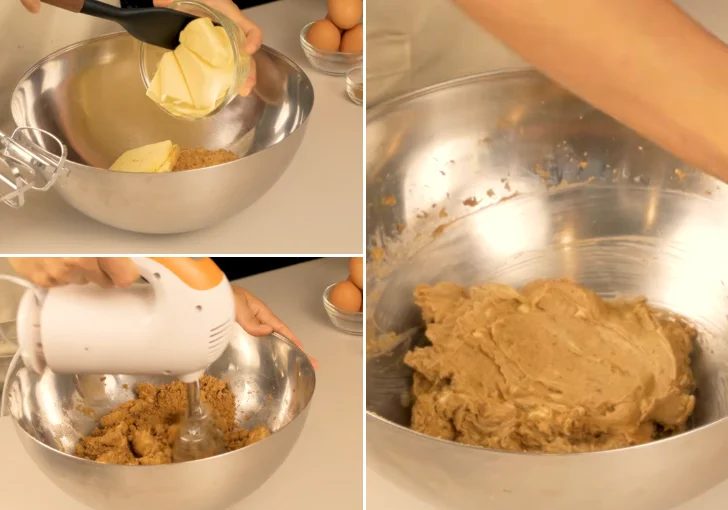
Place the softened butter and brown or demerara sugar in a large mixing bowl. Beat with an electric hand mixer until the mixture is well combined, lighter in texture and evenly blended. Scrape down the sides of the bowl with a spatula so that no pockets of butter or sugar remain. Demerara sugar gives a slightly more textured finish, while dark brown sugar provides a deeper molasses flavour.
Step 05 – Incorporate the eggs
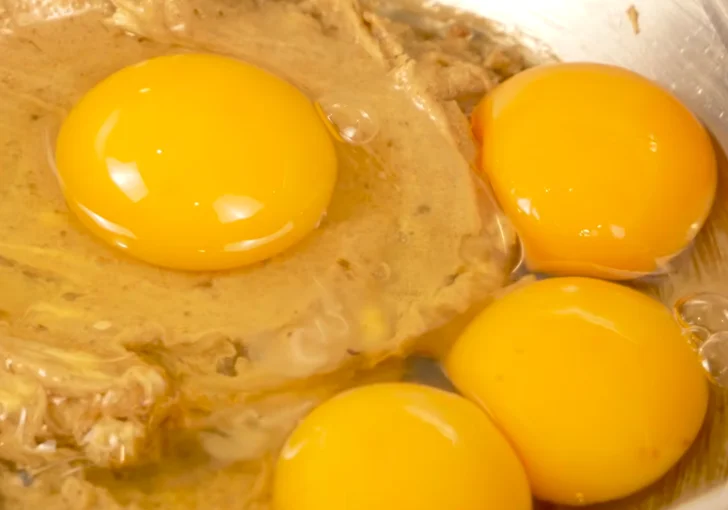
Add the eggs one at a time, beating well after each addition. Scrape the sides and base of the bowl as needed to ensure an even mixture. The mixture may look slightly curdled or split at this stage, particularly if the eggs are colder than the butter. This is not a reason to discard the mixture; continue with the recipe and incorporate the dry ingredients gradually.
Step 06 – Add the black treacle
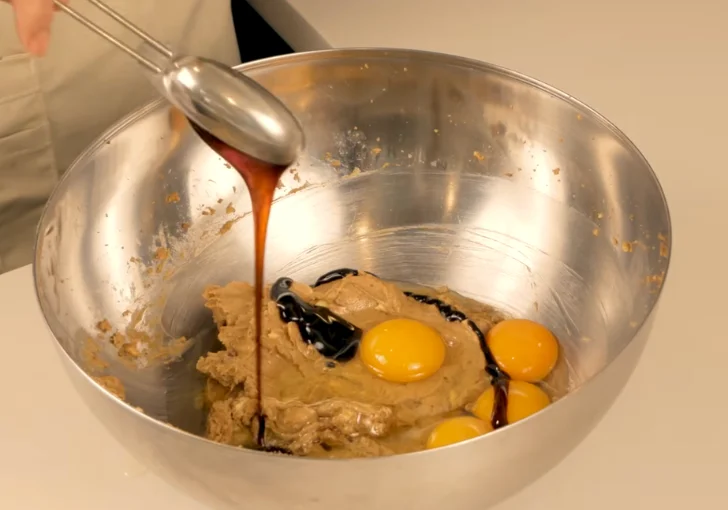
Measure out two tablespoons of black treacle and add it to the butter, sugar and egg mixture. Beat until the treacle is evenly distributed and the mixture takes on a darker colour. Black treacle contributes a rich molasses flavour, moisture and the characteristic deep colour associated with traditional Christmas cake. Scrape the spoon against the side of the bowl to use as much of the treacle as possible.
Step 07 – Mix in the almonds and mixed spice
Add the ground almonds or finely crushed almonds to the bowl, followed by one teaspoon of mixed spice. Mix thoroughly until the almonds are evenly incorporated. The almonds contribute richness and help create a moist crumb, while the mixed spice provides a warm blend of festive flavours.
If the mixture appears slightly uneven, continue mixing briefly until the ingredients are distributed throughout.
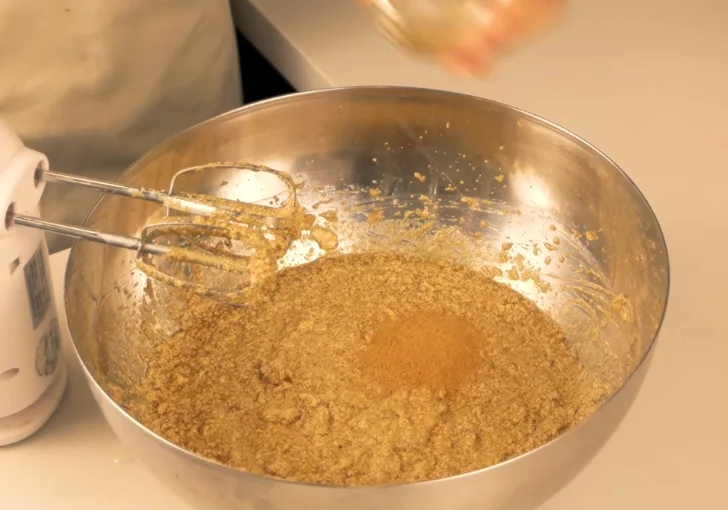
Step 08 – Fold in the plain flour
Sift the plain flour into the bowl in two or three additions. Mix gently after each addition using a wooden spoon or spatula, scraping the sides and base of the bowl to collect any dry flour.
Avoid vigorous beating once the flour has been added. Continue until no visible pockets of flour remain and the cake mixture is thick and uniform.
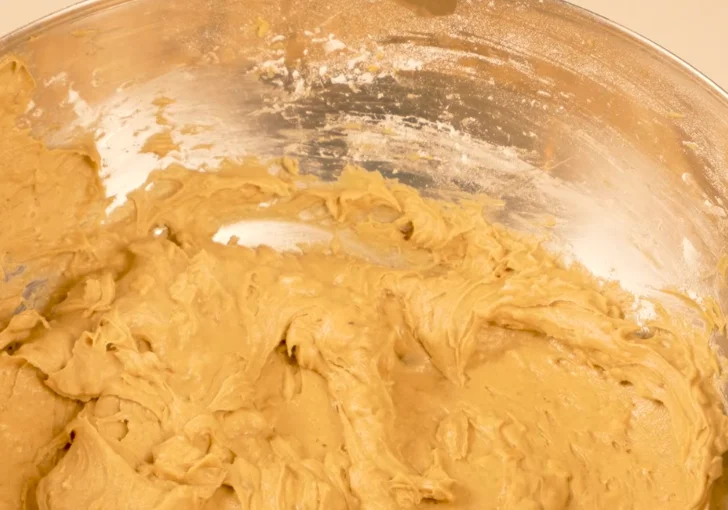
Step 09 – Add the soaked fruit
Tip the brandy-soaked fruit and any remaining soaking liquid into the cake mixture. Use a large spoon or sturdy spatula to fold the fruit through until it is evenly distributed. The mixture will be dense and heavy because of the substantial quantity of dried fruit.
Make sure fruit is incorporated right to the bottom of the bowl, as uneven mixing can leave sections of the finished cake with too little fruit.
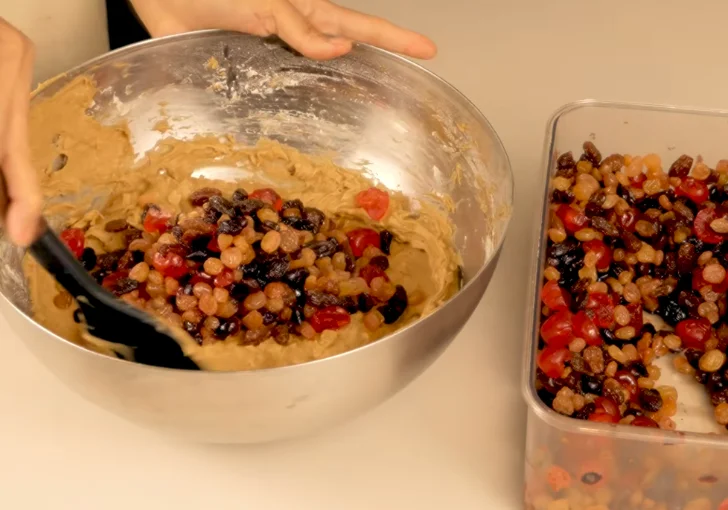
Step 10 – Fill and level the cake tin
Spoon the mixture into the prepared 22 cm cake tin in several additions. Press each addition gently into place with the back of a spoon or spatula to remove large air pockets. Once all the mixture is in the tin, level the surface and make a slight depression in the centre.
This helps the cake bake more evenly, as the middle tends to rise during cooking. The tin should be filled with the mixture without leaving large gaps or trapped pockets.
Step 11 – Bake the Christmas cake slowly
Place the cake tin in the preheated oven and bake at 140°C conventional or 120°C fan for approximately 3½–4½ hours. Avoid opening the oven door frequently during the first few hours, as sudden temperature changes can affect the bake.
Begin checking towards the earlier end of the estimated baking time. Insert a long wooden skewer into the centre of the cake; it should come out clean or with a few dry crumbs, without wet cake mixture.
If the centre is still wet, continue baking and check again at intervals of 15–20 minutes. If the surface becomes too dark before the centre is cooked, cover it loosely with baking parchment.
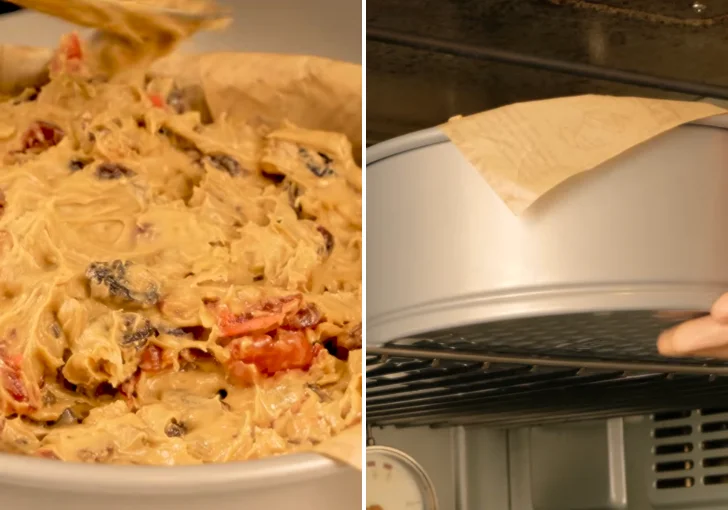
Step 12 – Cool the cake completely
Remove the tin from the oven and leave the cake to cool in the tin. Once it is cool enough to handle, carefully turn it out and remove the baking parchment. Place the cake on a wire rack and allow it to cool completely before adding any extra brandy.
Adding alcohol while the cake is hot can cause excessive evaporation and may affect the texture of the cake.
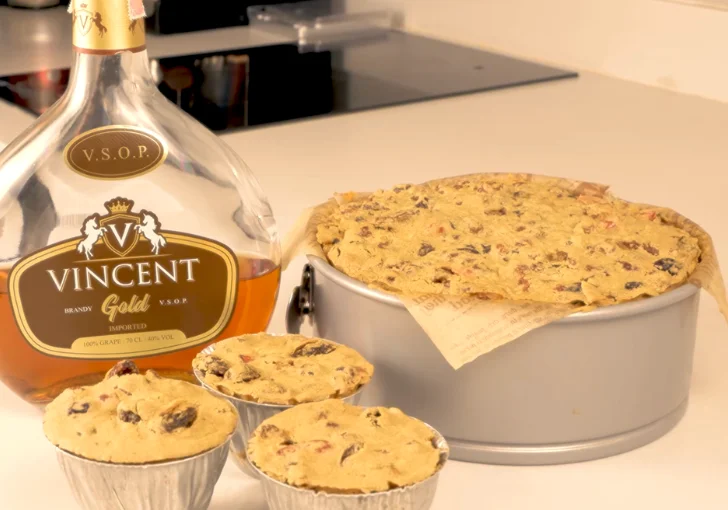
Step 13 – Feed the cake with brandy
Use a fine skewer to pierce several small holes across the top of the completely cooled cake. Drizzle a little brandy over the surface, allowing it to seep into the holes.
Start with approximately two to four tablespoons, adjusting to your preference rather than saturating the cake. Wrap the cake in baking parchment and then foil, or place it in an airtight cake container.
Leave it for approximately 24 hours so the brandy can distribute through the fruit cake. If children will be eating the cake, bear in mind that adding brandy does not make the cake alcohol-free.
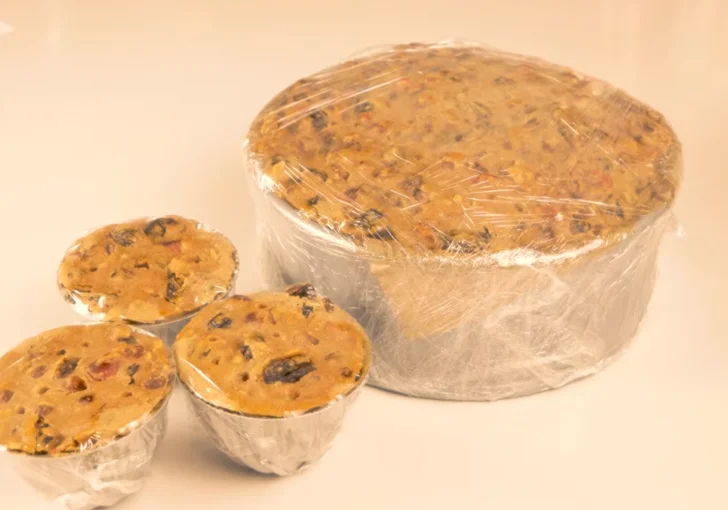
Step 14 – Store the cake before decorating
For the best flavour, keep the cooled cake wrapped and stored in a cool, dry place while preparing the marzipan layer. If you intend to store it for an extended period, use a suitable airtight container in the refrigerator.
This cake can be storage for up to three months in the fridge, but the actual safe storage period depends on preparation, handling, refrigeration and the amount of alcohol used.
Do not assume that a homemade cake is safe for three months solely because brandy has been added. Bring the cake back to a suitable temperature before decorating, and make sure its surface is dry.
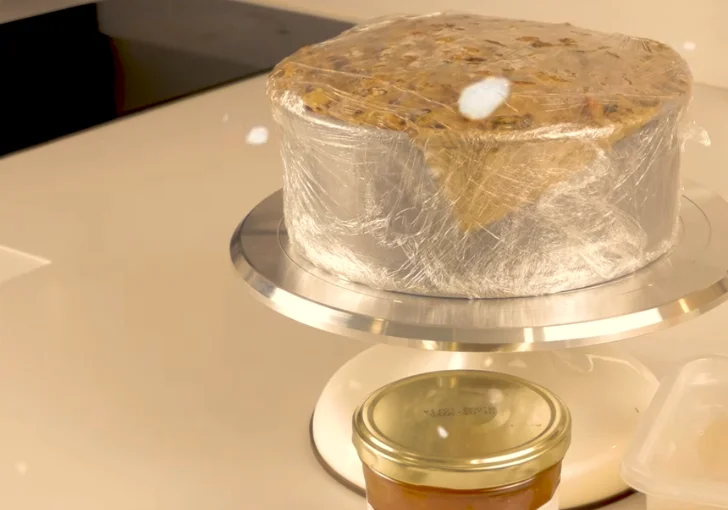
Step 15 – Warm the apricot jam
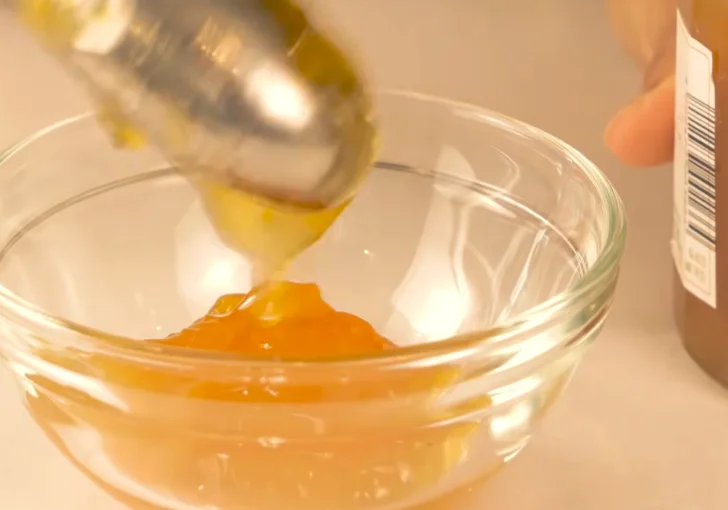
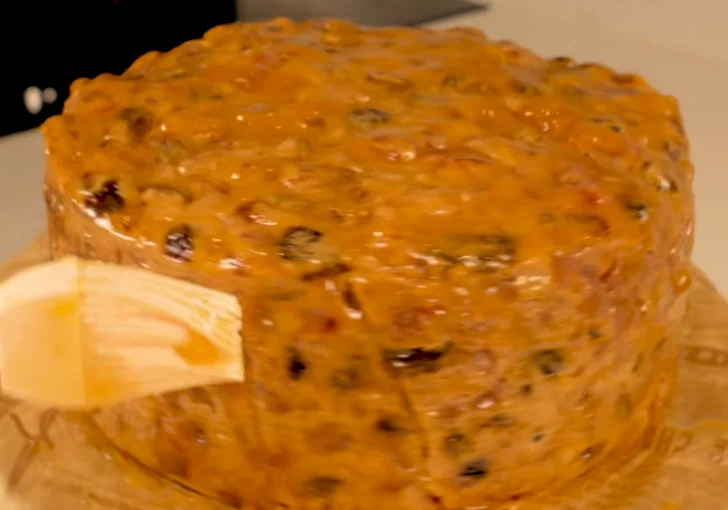
Place two tablespoons of apricot jam in a small microwave-safe bowl and warm it for approximately 10–15 seconds, just until it becomes easier to spread. Stir well and check that it is not hot enough to burn your fingers.
If the jam contains large pieces of fruit, press it through a sieve for a smoother coating. Brush or spread a thin, even layer over the top and sides of the cake. This acts as an adhesive for the marzipan and helps it sit neatly against the cake.
Step 16 – Roll out the marzipan
Lightly dust a clean work surface and rolling pin with icing sugar. Knead the 500 g block of marzipan briefly until pliable, then roll it out evenly to approximately 5–6 mm thick. Rotate the marzipan regularly and lift or turn it over as needed to prevent sticking.
Keep the icing sugar dusting light, as too much can dry out the surface. Roll a large enough sheet to cover the top and sides of the cake, allowing a little excess around the edges for trimming.
Step 17 – Cover the cake with marzipan
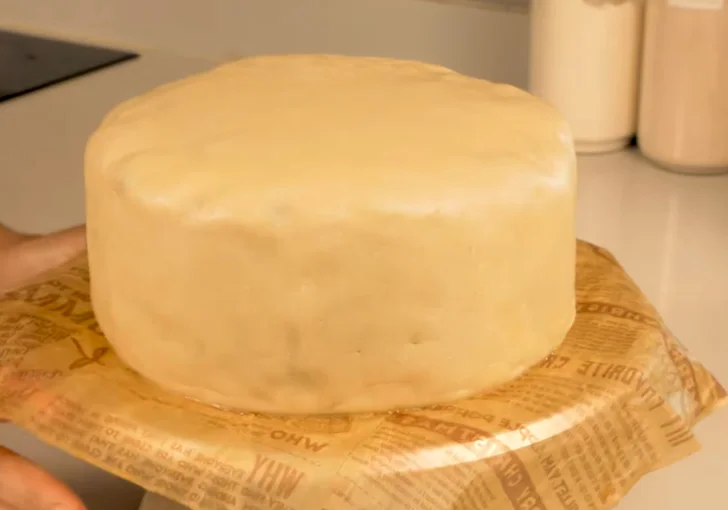
Carefully lift the rolled marzipan and position it over the jam-coated cake. Smooth it gently over the top first, then work down the sides, pressing lightly with your hands to remove air pockets and creases. Avoid pulling the marzipan too tightly, as this can cause tearing.
Trim away the excess around the base with a sharp knife and smooth the edges until the coating sits neatly against the cake. Allow the marzipan to dry for at least 24 hours, preferably 48 hours, before adding the royal icing.
Step 18 – Prepare the royal icing
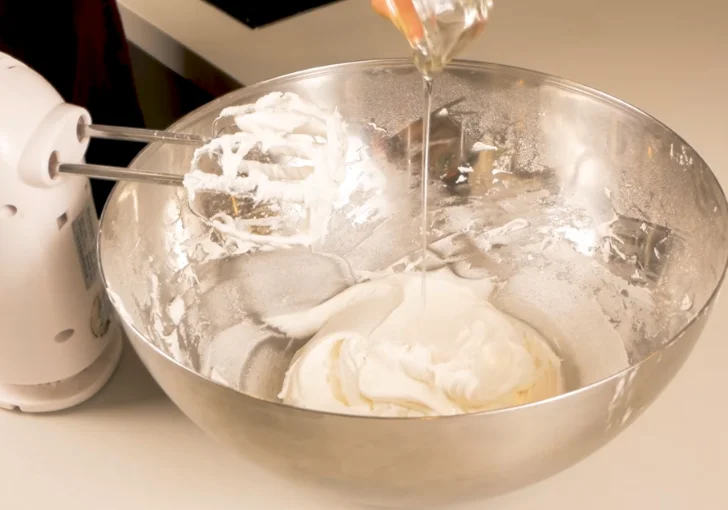
Separate the egg whites from the yolks, taking care that no yolk enters the whites. Place the whites in a clean, grease-free mixing bowl and beat until frothy. Add the sifted icing sugar gradually, a few spoonfuls at a time, beating continuously until the icing becomes thick, smooth and capable of holding its shape. Mix in the glycerine, if using, and the white wine vinegar.
Continue beating until everything is evenly incorporated. If the icing is too stiff to spread, adjust it cautiously with a few drops of water; if it is too loose, add a little more sifted icing sugar.
Step 19 – Apply the royal icing
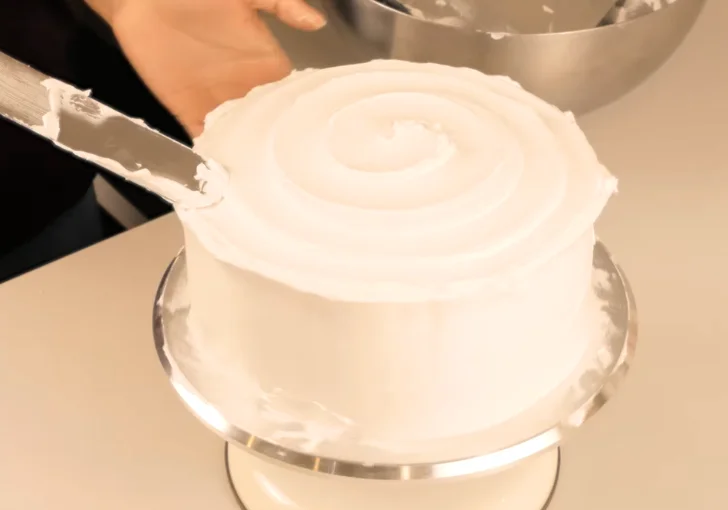
Place the marzipan-covered cake on a cake board or serving plate. Spoon the royal icing over the top and spread it towards the edges using a palette knife or the back of a spoon. Work the icing down the sides, adding more as needed to cover the marzipan completely.
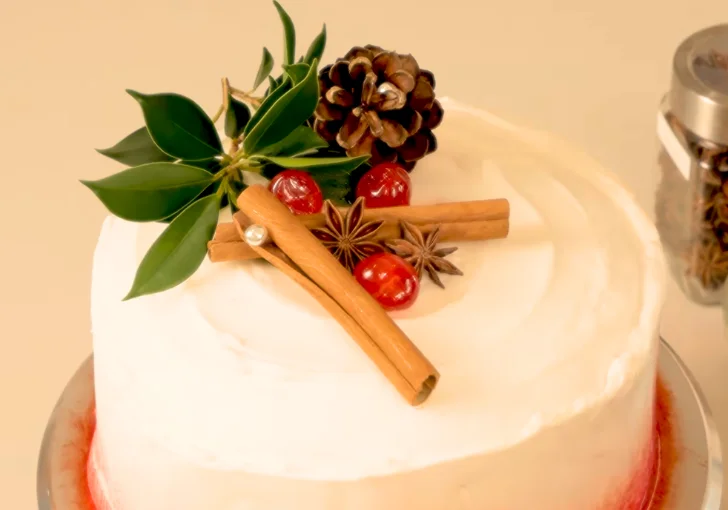
For a rustic Christmas finish, create small peaks and swirls by lifting the spoon away from the icing at intervals.
Alternatively, smooth the surface for a neater finish. Ensure the cake is positioned centrally before making the final adjustments.
Step 20 – Add the Christmas decorations
If you want a red accent, dip a clean, food-safe brush lightly into red food colouring or use red food gel diluted according to its instructions. Brush a small amount along the sides or selected areas of the icing, keeping the application light to avoid making the icing wet. Finish with edible snowflakes, sugar decorations or other festive garnishes.
Allow the icing to set in a cool, dry place, following the setting time recommended for the icing used. Avoid sealing freshly iced cake in an airtight container until the icing has dried.
Step 21 – Slice and serve
Once the royal icing has set, use a sharp knife to cut the cake into slices. A rich fruit cake is best served in relatively thin portions because of its dense texture. Wipe the knife between cuts if you want clean slices through the icing and fruit.
Serve at room temperature for the best flavour, and return any remaining cake to suitable storage after serving.
How to Tell When the Mary Berry Christmas Cake is Done
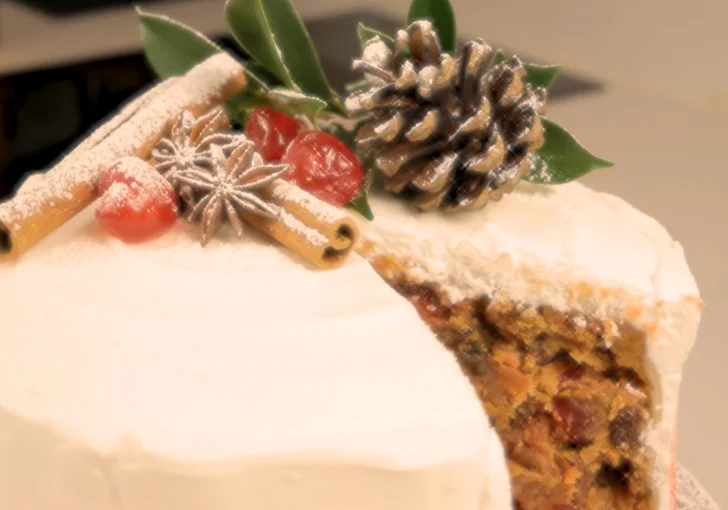
A dense fruit cake can look finished long before the middle is cooked. So don’t trust your eyes alone. Push a long, thin skewer right into the centre. It should come out clean, or with a few dry crumbs.
Wet, sticky mixture means it needs longer. Bake and check again every 15 to 20 minutes. The top should be a deep golden brown and the centre should feel firm when you press it lightly.
If the top browns too fast, cover it loosely with baking parchment and keep going. Don’t take it out early. An underbaked fruit cake sinks and tastes heavy.
Tips & Notes for a Moist, Rich Mary Berry Xmas Cake
- Soak the fruit for the full three days. It makes a real difference.
- Use unwaxed oranges for zest. It tastes cleaner.
- Take the butter out of the fridge a few hours before you start.
- Wrap the outside of the tin in a double layer of brown paper for extra protection.
- Warm your treacle spoon in hot water so the treacle slides off.
- Weigh everything. Fruit cakes don’t forgive guesswork.
- Let the marzipan dry fully before icing, so no oil bleeds through.
- Use pasteurised egg whites for the icing if you’re serving vulnerable guests.
Mary Berry Xmas Cake Variations You Can Try
Orange and lemon Christmas cake – Replace one orange’s zest with finely grated lemon zest. The fresh citrus flavour gives the rich fruit a slightly sharper edge.
Extra cherry fruit cake – Replace some of the raisins with extra glacé cherries, keeping the total dried fruit weight similar. Dry the cherries well before adding them.
A nut-free version – Leave out the ground almonds and use an extra 100 g of plain flour. The cake will have a different crumb, and you must check all ingredient labels for nut cross-contact.
A brandy-free Christmas cake – Soak the fruit in orange juice or apple juice instead. Keep the cake refrigerated once cool and use it sooner, as juice does not preserve the cake in the same way as an alcohol-fed version.
A simple, uniced fruit cake – Leave off the marzipan and royal icing. Brush the cooled cake with a little warmed apricot jam, or serve it plain in thin slices. This is a handy option if you prefer less sweetness.
Store and Make Christmas Cake Ahead Instructions
Refrigeration and wrapping. Before you add marzipan, wrap the cooled cake in baking parchment, then a double layer of foil. Keep it in an airtight tin somewhere cool and dry. The fridge helps if your kitchen is warm, but a tin in a cold pantry works well too.
When and how to feed it. Feed with a tablespoon or two of brandy once a week for the first few weeks. Prick the top, drizzle, then re-wrap. Stop a week or so before you marzipan, so the surface is dry.
Freezing. You can freeze the plain, un-iced cake, wrapped tightly, for up to three months. Thaw it slowly overnight in the fridge. Don’t freeze it once iced.
Alcohol-free swaps. Without brandy, the cake loses its natural preservative. Keep it in the fridge, bake it closer to the day, and eat it within a couple of weeks.
Other Making Options for Mary Berry Xmas Cake
The oven method above gives the most reliable results for this recipe, but a few other approaches can work with the right equipment.
Fan oven: Bake at 120°C fan, following the same method and checking the centre with a skewer. Fan ovens can vary, so begin checking towards the earlier end of the baking time.
Conventional oven: Use 140°C on the lower-middle shelf. This is the standard method in the recipe and works well for a dense fruit cake.
Electric oven with top and bottom heat: Use the manufacturer’s conventional baking setting at 140°C. Keep the cake away from the top heating element and cover it with baking parchment if it darkens too quickly.
Smaller cakes: Divide the mixture between two suitably sized, deep, lined tins if you want smaller cakes. They will bake faster than one large cake, so check them early and don’t rely on the original baking time.
I wouldn’t recommend a slow cooker or microwave for this full-sized cake. The dense mixture needs a long, steady bake, and these appliances may not cook the centre evenly.
Serving Ideas With This Mary Berry Xmas Cake
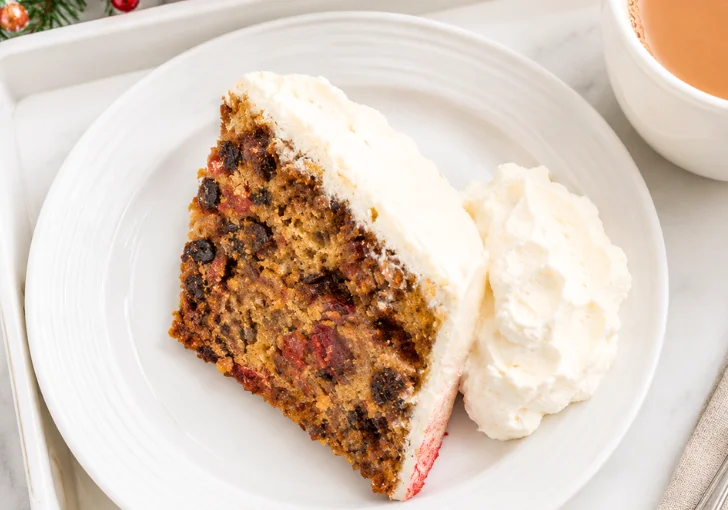
I like serving this Christmas cake in thin slices because the fruit makes it quite rich. A pot of English breakfast tea is a lovely match, while coffee works well for an afternoon treat.
For a little extra indulgence, add a spoonful of softly whipped cream beside the cake, or offer a small piece of mature Cheddar for a traditional British contrast.
If you’re serving the cake after Christmas dinner, cut the slices before bringing it to the table. The icing can be firm, so a sharp knife helps keep the edges tidy.
A few edible snowflakes or a sprig of rosemary on the serving plate add a festive touch without making the cake too fussy.
Mary Berry Xmas Cake Recipe FAQs
Can I make this Mary Berry Xmas cake without alcohol?
Yes, you can. Soak the fruit in cold strong tea, orange juice or apple juice instead of brandy. The cake will taste slightly lighter and won’t keep as long, so bake it closer to Christmas and keep it in the fridge.
How long should I soak the dried fruit?
For this recipe, soak the raisins, currants, sultanas and cherries in brandy for three days. Keep the bowl covered in a cool place and stir the fruit once each day. The fruit should absorb some of the liquid and become plumper. Don’t leave it swimming in excess brandy.
Can I use raisins instead of currants?
Yes. Replace the 400 g of currants with 400 g of raisins. The finished cake will still have plenty of fruit, though the texture will be slightly different because raisins are larger. Weigh the replacement rather than guessing the amount, so the balance of fruit and cake mixture stays close to the recipe.
Why is my Christmas cake still wet in the middle?
The centre may need more baking time, especially if your oven runs cool or the fruit was particularly moist. Check it with a long wooden skewer. If wet mixture sticks to it, return the cake to the oven for another 15–20 minutes. Cover the top loosely with baking parchment if it is already dark.
Can I make this Christmas cake without alcohol?
Yes, but use orange juice, apple juice or strong black tea to soak the fruit instead of brandy. The flavour will be different, and the cake will not have the same keeping qualities. Refrigerate the cooled cake and use it sooner. Check that any icing or flavourings are also alcohol-free.
Does this recipe contain nuts?
Yes. The cake contains ground almonds, and the marzipan also contains almonds. If someone eating the cake has a nut allergy, don’t simply remove the visible almonds. Choose suitable alternatives and check every ingredient label for allergy warnings and cross-contact. A nut-free version needs care because marzipan is a key part of the traditional finish.
Can I leave off the marzipan and royal icing?
Certainly. You can serve the cake plain, or brush the top with a thin layer of warmed apricot jam for a simple finish. The marzipan and icing add sweetness and give the cake its classic appearance, but they aren’t needed to bake the fruit cake itself.
How do I stop the top from burning?
Bake at the low temperature given in the recipe and use a properly lined, deep tin. If the top becomes dark before the centre has cooked, cover it loosely with baking parchment. Don’t turn up the temperature to shorten the baking time. Check the centre at regular intervals until the skewer comes out clean or with a few dry crumbs.
Can I freeze Mary Berry Xmas Cake?
Yes. Cool the cake completely, then wrap it well in baking parchment and foil before placing it in a freezer-safe container. Freeze it undecorated for up to three months for best quality. Thaw it in the fridge while still wrapped, then let the surface dry before adding jam, marzipan and icing.
Why does my cake look curdled after adding the eggs?
This often happens when the eggs are colder than the butter or when the mixture doesn’t blend smoothly. It doesn’t usually mean the cake has failed. Add the eggs one at a time, beating after each addition, then continue with the recipe. Sifting and gently folding in the flour helps bring the mixture together.
How long does this Christmas cake take to bake?
Allow around 3½–4½ hours at 140°C in a conventional oven or 120°C in a fan oven. The exact time depends on your oven, tin and mixture. Start checking towards the earlier end of the range, then continue in 15–20 minute stages if the centre is still wet.
When should I add the royal icing?
Cover the cake with apricot jam and marzipan first, then let the marzipan dry for at least 24 hours. Forty-eight hours is better if time allows. This gives the surface a chance to dry and helps stop moisture from affecting the royal icing. Let the finished icing set before wrapping or storing the cake.

Mary Berry Xmas Cake Recipe (rich fruit cake)
This Mary Berry Xmas Cake Recipe is packed with brandy-soaked raisins, currants, sultanas, glacé cherries, orange zest and warm mixed spice. This traditional Christmas fruit cake bakes slowly for a rich, moist center and gets a classic finish with marzipan and royal icing. Prep the fruit ahead, then enjoy a rewarding festive bake with simple steps. Serve thin slices with tea, coffee, or a spoonful of cream for a lovely Christmas treat.
Ingredients
Dried fruit
- 600 g raisins
- 400 g currants, or an additional 400 g raisins if currants are unavailable
- 200 g sultanas
- 200 g glacé cherries, halved
Flavouring
- Finely grated zest of 2 oranges
- 150 ml brandy, plus extra for feeding the cake
For the cake mixture
- 250 g unsalted butter, softened
- 250 g dark brown sugar or demerara sugar
- 4 large eggs
- 2 tbsp black treacle
- 100 g ground almonds or finely crushed almonds
- 1 tsp mixed spice
- 300 g plain flour, sifted
For the marzipan layer
- 2 tbsp apricot jam
- 500 g ready-made marzipan
- A little icing sugar, for dusting the work surface
For the royal icing
- 3 large egg whites, preferably pasteurised
- 675 g icing sugar, sifted
- 1 tsp glycerine, optional
- 1 tsp white wine vinegar
For decoration (optional)
- Red food colouring or red food gel
- Edible Christmas decorations or sugar snowflakes
Instructions
- Prepare the dried fruit: Wash the glacé cherries thoroughly under cold running water, pat them completely dry with kitchen paper, and cut each cherry in half. Weigh the raisins, currants and sultanas, then place all the dried fruit and halved cherries into a large mixing bowl. If currants are unavailable, replace them with an equal weight of raisins.
- Add the orange zest and brandy: Finely grate the zest of two oranges over the dried fruit, avoiding the bitter white pith. Pour in 150 ml of brandy and stir thoroughly until the fruit is evenly coated. Transfer the mixture to a clean, food-safe container with a lid and leave it to soak for three days, stirring once daily. Add a little extra brandy if desired.
- Prepare the cake tin and oven: Grease a deep 22 cm round cake tin with butter and line the base and sides with baking parchment. Preheat a conventional oven to 140°C or a fan oven to 120°C.
- Cream the butter and sugar: Place the softened butter and brown or demerara sugar in a large mixing bowl. Beat with an electric hand mixer until well combined and lighter in texture, scraping down the sides of the bowl to ensure everything is evenly mixed.
- Incorporate the eggs: Add the eggs one at a time, beating well after each addition. Scrape down the sides and base of the bowl as needed. The mixture may look slightly curdled or split, but continue with the recipe.
- Add the black treacle: Measure out two tablespoons of black treacle and add them to the butter, sugar and egg mixture. Beat until evenly incorporated and the mixture takes on a darker colour.
- Mix in the almonds and mixed spice: Add the ground or finely crushed almonds and one teaspoon of mixed spice to the bowl. Mix thoroughly until evenly distributed throughout the batter.
- Fold in the plain flour: Sift the plain flour into the bowl in two or three additions, mixing gently after each addition with a wooden spoon or spatula. Scrape the sides and base of the bowl until no visible pockets of flour remain.
- Add the soaked fruit: Tip the brandy-soaked fruit and any remaining soaking liquid into the cake mixture. Fold thoroughly with a sturdy spoon or spatula until the fruit is evenly distributed throughout the thick batter.
- Fill and level the cake tin: Spoon the mixture into the prepared cake tin in several additions, pressing each layer gently into place to remove large air pockets. Level the surface and make a slight depression in the centre.
- Bake the Christmas cake: Place the tin in the preheated oven and bake at 140°C conventional or 120°C fan for approximately 3½–4½ hours. Insert a long wooden skewer into the centre; the cake is ready when it comes out clean or with a few dry crumbs. If the centre remains wet, continue baking and check every 15–20 minutes.
- Cool the cake completely: Remove the cake from the oven and leave it to cool in the tin. Once cool enough to handle, carefully turn it out, remove the baking parchment and transfer it to a wire rack. Allow it to cool completely before adding extra brandy.
- Feed the cake with brandy: Pierce several small holes across the top of the cooled cake using a fine skewer. Drizzle approximately two to four tablespoons of brandy over the surface, allowing it to seep into the holes. Wrap the cake in baking parchment and foil, or place it in a suitable cake container, and leave it for approximately 24 hours.
- Store the cake before decorating: Keep the cooled cake wrapped in a suitable container in a cool, dry place while preparing the decorations. For extended storage, refrigerate it in an airtight container. Before decorating, bring the cake to a suitable temperature and ensure the surface is dry.
- Warm the apricot jam: Place two tablespoons of apricot jam in a microwave-safe bowl and warm for approximately 10–15 seconds until easy to spread. Stir well and sieve if necessary to remove fruit pieces. Brush a thin, even layer over the top and sides of the cake.
- Roll out the marzipan: Lightly dust a clean work surface and rolling pin with icing sugar. Knead the 500 g block of marzipan briefly until pliable, then roll it out evenly to approximately 5–6 mm thick, rotating it regularly to prevent sticking. Ensure the sheet is large enough to cover the top and sides of the cake.
- Cover the cake with marzipan: Carefully position the rolled marzipan over the jam-coated cake. Smooth it gently over the top and down the sides, pressing out air pockets and creases. Trim away the excess with a sharp knife and smooth the edges. Allow the marzipan to dry for at least 24 hours, preferably 48 hours, before icing.
- Prepare the royal icing: Separate the egg whites from the yolks and place the whites in a clean, grease-free mixing bowl. Beat until frothy, then gradually add the sifted icing sugar while mixing continuously until the icing becomes thick and smooth. Add one teaspoon of glycerine, if using, and one teaspoon of white wine vinegar. Mix until fully incorporated. Use pasteurised egg whites if preferred for food safety.
- Apply the royal icing: Place the marzipan-covered cake on a cake board or serving plate. Spoon the royal icing over the top and spread it towards the edges using a palette knife or the back of a spoon. Work the icing down the sides until the marzipan is completely covered. Create rustic peaks and swirls with the spoon, or smooth the surface for a neater finish.
- Add the Christmas decorations: Use a clean, food-safe brush to apply a small amount of red food colouring or food gel to the sides of the icing, if desired. Finish with edible snowflakes, sugar decorations or other festive garnishes. Leave the icing in a cool, dry place until set.
- Slice and serve: Once the royal icing has set, cut the cake into slices with a sharp knife. Serve at room temperature and wipe the knife between cuts for neat slices. Return any leftover cake to suitable storage after serving.
Nutrition Information:
Serving Size:
16–20 thin slicesAmount Per Serving: Calories: 500
This Mary Berry Xmas Cake Recipe is a lovely choice if you enjoy a traditional British Christmas bake with plenty of fruit, warm spice and a rich brandy flavour.
The secret is to plan ahead, soak the fruit properly and give the cake enough time in the oven.
You don’t need to rush the decorating either. Make it your own with a classic white finish or keep it simple and serve it plain.